More homeowners are seeking ways to create comfortable, durable, and hygienic outdoor spaces for their animals. The result is a crowded market for “pet-friendly” turf where it’s increasingly hard to know what genuinely meets pets’ needs.
What “Pet-Friendly” Should Actually Mean

The term “pet-friendly” is often used in marketing, but what does it actually guarantee for you and your pets? True pet-friendly artificial turf must meet high standards for safety, durability, and daily hygiene, not just boast a soft surface or green color.
Here’s what buyers should expect from genuinely pet-safe turf:
- Certified Safety: Look for products that comply with recognized standards like EN 71-3 or REACH compliance, both of which are widely adopted by reputable turf manufacturers to demonstrate non-toxicity and peace of mind.
- Durability and Comfort: Turf should withstand repeated pet activity without matting or tearing, and maintain a comfortable, realistic surface.
- Advanced Drainage: High-quality turf should quickly remove urine and reduce odor risk.
- Odor and Hygiene Control: Odor-control infills and easy-clean surfaces make ongoing maintenance manageable for both pets and owners.
Eco-conscious buyers will also appreciate that pet-friendly artificial turf eliminates the need for pesticides and fertilizers, helping minimize chemical exposure for both pets and the environment.
For a detailed breakdown of what sets true pet turf apart, see our full explanation of pet turf and its benefits.
Key Features to Look for in Turf Used by Pets
Not all artificial turf is created equal, especially when pets are involved. Here’s what to compare:
Drainage and Cleanup
Efficient drainage is paramount. Without it, moisture and waste can lead to unpleasant odors and unsanitary conditions.
Look for turf systems that move liquid away quickly and are easy to rinse.
Surface Feel, Backing, and Stability
Surface feel and stability are just as critical. Soft, resilient fibers can help keep the surface comfortable, while reinforced backing helps prevent tears and digging.
Dense pile and high stitch count indicate better durability for active pets. Non-toxic materials and odor-control infills keep surfaces safer and easier to clean. Using specialized infills, such as zeolite, can further neutralize ammonia from pet urine and manage odors.
Artificial turf doesn’t produce pollen, which can help reduce allergy symptoms in sensitive pets.
For a step-by-step breakdown of how to evaluate these features, see our complete guide to choosing the best artificial grass for dogs.
How Pet Use Changes What Matters Most
Scenario: Consider two pet owners, one with a balcony potty area for a small dog, and another with a backyard for play and relief. Their priorities differ. The balcony owner needs quick drainage and odor control, while the backyard owner may prioritize durability and natural feel.
Additionally, artificial turf is less likely to harbor fleas and ticks, lowering the risk of pest infestations in pet areas.
If you’re debating a balcony setup, is fake grass for dogs to pee on balcony a good idea? Our article breaks down the pros and cons.
The Questions Buyers Should Ask Before They Commit
Every pet owner should ask a few key questions before purchasing turf:
- Is the turf certified non-toxic and free from harmful chemicals (EN 71-3, REACH, ASTM)?
- What’s the drainage rate, and will it prevent odor or pooling?
- How easy is it to clean and maintain?
- How long is the expected lifespan?
- What type of infill is used, and how often will it need to be refreshed or cleaned?
High-quality pet turf can last for years depending on usage and upkeep.
To browse certified, pet-friendly turf options, view our full artificial grass collection.
Common Mistakes When Shopping for “Pet-Friendly” Turf
Many buyers regret focusing on surface softness or color, only to discover persistent odor or cleaning headaches later.
Odor often results from poor drainage. A good installation with adequate drainage support is essential.
Failing to secure edging can make it easier for pets to dig up the turf perimeter.
For tips on keeping turf fresh, read our guide on removing pet odors from your artificial grass lawn.
A Quick Decision Guide for Choosing a Pet-Friendly Turf Option
| Decision Factor | Best for Small Dogs & Balcony Areas | Best for Active Dogs & Yards |
|---|---|---|
| Drainage | High-rate drainage is essential | High-rate drainage is crucial |
| Surface Feel | Soft, non-abrasive, odor-control infill | Dense pile, reinforced backing, realism |
| Odor Control | Zeolite infill, easy-rinse surface | Odor-control infill, easy cleaning |
| Durability | Reinforced backing and high stitch density prevent damage and maximize turf longevity | Reinforced backing and high stitch density prevent damage and maximize turf longevity |
| Maintenance | Easy-clean, compact area | Routine brushing, prompt waste removal |
Once you know your must-have features, browse our main turf collection to find the perfect fit.
Share:
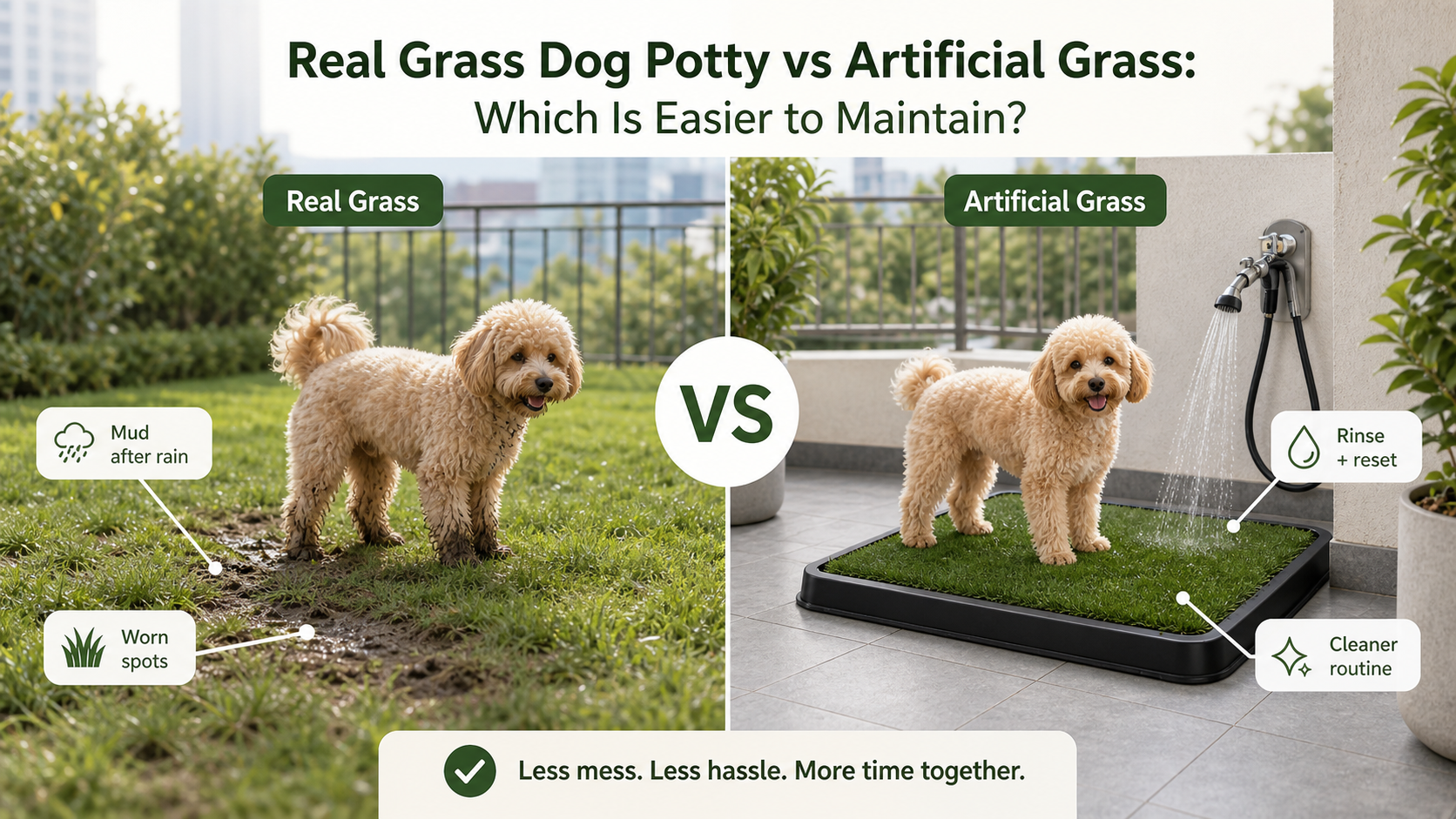
Real Grass Dog Potty vs Artificial Grass: Which Is Easier to Maintain?
Indoor Grass for Dogs: Is Artificial Turf a Good Potty Solution?