
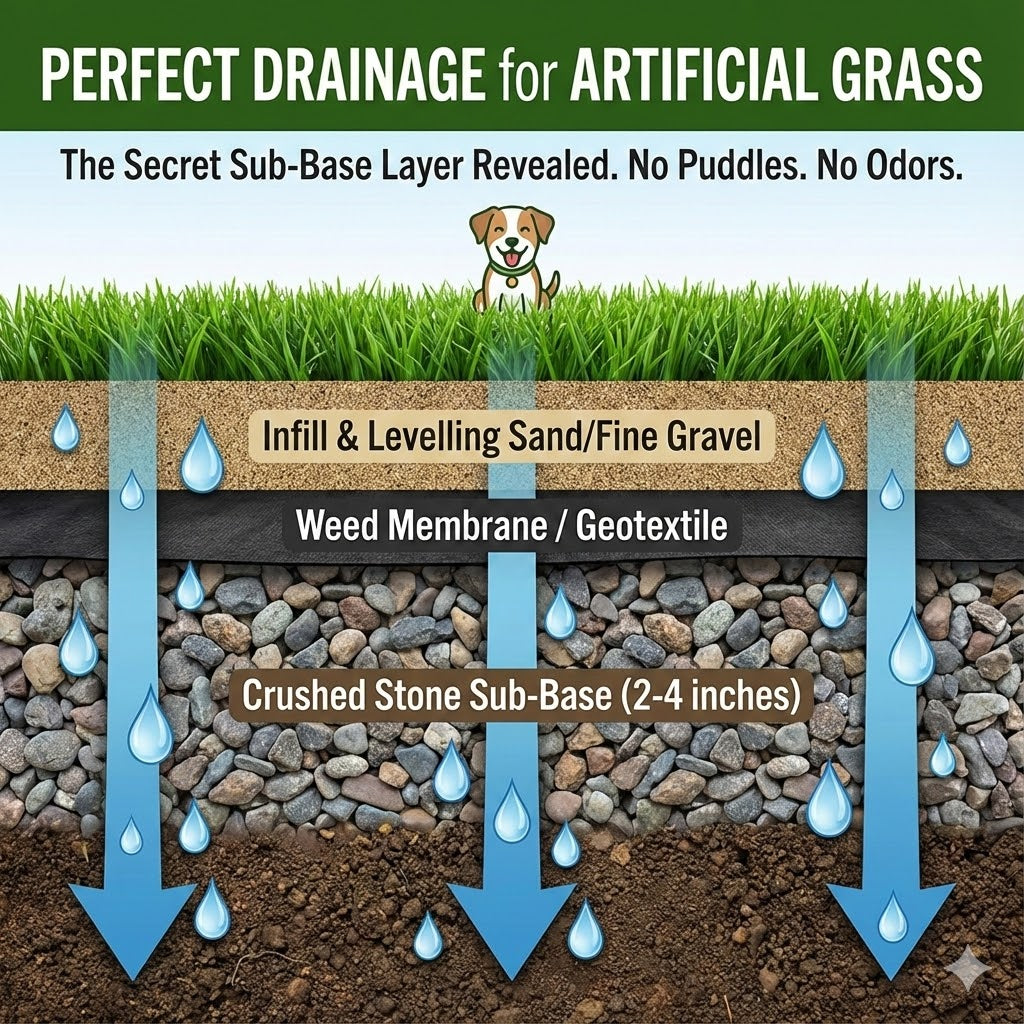
If you are thinking about installing artificial grass, you might be wondering what to put under artificial grass for drainage. Good drainage is one of the most important parts of a strong, long-lasting artificial lawn. When water drains well, it keeps your yard cleaner, drier, and easier to maintain. When it does not, puddles, bad smells, and even mold can form under your turf.
In this guide, you will learn what materials to use under artificial turf, how to build the right artificial grass base, and how to make sure water drains through your new lawn. The strongest setup is usually a compacted sub-base, a drainage layer, and turf installed over materials that let water move instead of pooling.
Best Base for Artificial Grass
The best base for artificial grass is usually a compacted layer of crushed stone, crushed granite, decomposed granite, or similar turf base material. These materials create a stable foundation while still allowing water to pass through.
For most residential yards, a 2 to 4 inch artificial turf base is common. For heavier-use areas, play spaces, or poor-draining soil, a deeper base or added drainage system may be needed.
Why Drainage Matters for Artificial Grass
Artificial grass or synthetic turf is made with small drainage holes in the backing. These holes let rainwater and washing water move through the turf and into the base layers below. If you use the wrong materials under your turf, the water cannot escape and will collect on the surface.
Poor drainage can lead to:
- Puddles and standing water
- Mud and slippery areas
- Mold and mildew growth
- Bad smells, especially in pet areas
- Damage to the grass backing
That is why having the right drainage system under your artificial lawn is so important. A good base helps water flow away just like it does with natural grass.

Artificial Grass Base Layers Explained
The drainage system under synthetic grass is made of layers that allow water to pass through each one until it reaches the soil or a drain below. These layers usually include:
- A weed membrane or geotextile fabric
- A sub-base layer made of crushed stone, crushed granite, or decomposed granite
- A thin leveling sand, rock fines, or grano dust layer
- The artificial turf with small drainage holes
Together, these layers form a strong artificial grass drainage system that supports the turf and keeps your yard dry after rain.
In very wet yards, you can add French drains, perforated pipes, or drainage mats to help move more water away. These are small trenches filled with stones or pipes that carry water to a safe place like a storm drain or catch basin.
Can You Lay Artificial Grass Directly on Dirt?
You can place fake grass directly on dirt for a temporary setup, but it is not the best choice for a long-lasting lawn. Dirt can shift, hold water, grow weeds, and create low spots under the turf.
For a better installation, remove loose soil and build a compacted sub-base for artificial grass. This gives the turf a firm foundation and helps drainage under turf work properly.
Step 1: Preparing the Ground
Before installing your artificial lawn, you need to prepare the area. This part of the installation process is called ground preparation, and it makes a big difference in how your lawn drains.
Clear and Level the Area
- Remove the natural grass, roots, and about 2–4 inches of topsoil.
- Make sure the area slopes slightly away from your house or patio so rainwater can run off. A slope of 1–2% works best.
Check Irrigation Lines
If you have sprinklers, remove or cap them. Many people use sprinkler caps or irrigation lines to prevent leaks before installing turf.
Apply Weed Killer or Weed Barrier
To reduce weed growth, use a weed killer or place a weed barrier cloth over the soil before adding the base materials. The right choice depends on the site and the type of installation.
Step 2: Building the Sub-Base Layer
The sub-base layer is the most important part of your drainage system. This layer gives your lawn strength and lets water pass through quickly.
Most professionals use crushed stone, crushed granite, or decomposed granite for this step. These materials have small gaps that let water flow between them.
Choosing the Right Base Materials
Here are some good options:
- Crushed stone, usually ¾-inch or smaller pieces
- Class II road base, a strong mix of crushed rock and sand
- Crushed granite or decomposed granite for smooth, natural drainage
- Type 1 MOT or crushed limestone if you want a firm base
Spread the material evenly and compact it with a plate compactor or stamp compactor. Compacting helps the rocks lock together, making the ground stable and solid.
For regular backyards, make the sub-base about 2 to 4 inches thick. For play areas or heavier-use areas, use up to 6 inches. This helps handle more weight and rainwater.

Gravel Under Artificial Grass
Gravel under artificial grass helps create space for water to move. Crushed stone, crushed granite, and similar materials are better than solid soil because they do not trap water as easily.
If you are installing turf in a wet yard or dog area, gravel under turf can be one of the most important layers. It supports the surface and helps prevent urine, rain, and rinse water from sitting under the grass.
Step 3: Add a Weed Membrane or Geotextile Fabric
After the crushed stone layer is compacted, place a weed membrane or geotextile fabric over it. This thin sheet lets water flow through but keeps soil and weeds from mixing into your base.
Some people also call it landscape fabric or weed barrier cloth. It is one of the easiest ways to stop weeds and keep your lawn looking neat. The fabric also prevents small soil particles from clogging the spaces between the stones, which keeps the drainage layers working well for years.
Sand Under Artificial Grass: Do You Need It?
Sand under turf can help create a smoother surface, but it should usually be a thin leveling layer rather than the main drainage base. Too much sand can hold moisture or shift over time.
For drainage, crushed rock or decomposed granite is usually more important than sand. Use sand, rock fines, or grano dust only to smooth the surface before laying the turf.
Step 4: Add a Thin Leveling Layer
Next, spread a thin layer, about half an inch, of fine material to make the surface smooth. You can use sharp sand, stone dust, rock fines, or grano dust for this layer. This is called the leveling sand or base layer.
This layer is not meant to replace the drainage base. It just makes the surface even so the turf sits flat. Once you spread it, use the plate compactor again to pack it down.
Step 5: Installing the Artificial Grass
Now it is time to install your artificial turf or synthetic lawn. Roll out the turf carefully over the leveled base. Make sure the grass backing lines up correctly and that the drainage holes face down.
Securing the Turf
- Trim the edges with a utility knife.
- Join the pieces with turf seam tape and glue.
- Fix the edges using landscaping nails, landscape staples, or a bender board.
- Around flower beds, use rubber edging strips or paver base to keep everything tidy.
During the installation process, make sure you do not block the small holes in the turf backing. These holes are key to your drainage system.
Step 6: Adding the Infill Layer
Once the turf is in place, you may need to add an infill layer. This material helps the blades stand upright, adds weight to keep the turf in place, and can support water flow depending on the material used.
Good infill materials include:
- Silica sand – helps water flow and gives stability
- Zeolite infill or Zeofill minerals – helps with odor control and keeps the surface cooler
- Recycled rubber mulch – soft for playgrounds or some pet areas, depending on the use case
- Pet-safe turf deodorizer – optional for pet areas
Brush the infill into the grass using a stiff broom or power brush. Spread it evenly until the blades stand upright.
What to Put Under Artificial Grass for Dogs
For dogs, drainage is the main priority. The best setup usually includes a compacted crushed rock base, a drainage layer, and turf with a permeable backing. This helps urine, rinse water, and rain move through the system instead of staying on the surface.
Pet areas may also benefit from zeolite infill, odor-control infill, or a pet-safe deodorizer. Regular rinsing and cleaning are still important, especially in small yards, dog runs, balconies, and potty areas.
Common Drainage Problems to Avoid
- Using dirt as the only base material
- Adding too much sand and blocking drainage
- Failing to compact the sub-base
- Blocking the turf drainage holes with adhesive or debris
- Installing turf with no slope in a wet area
- Skipping drainage mats or French drains in yards that already flood

Final Thoughts
What you put under artificial grass for drainage matters just as much as the turf itself. The best setup usually includes a compacted artificial turf base made from crushed stone, crushed granite, or decomposed granite, followed by a weed membrane, a thin leveling layer, and turf with proper drainage holes.
For yards with heavy rain, poor soil, or pet use, you may also need drainage mats, French drains, perforated pipes, or odor-control infill. If you need help choosing the right setup for your space, PetGrow can help you plan a cleaner and longer-lasting artificial lawn. Contact us today for more Information.
Share:
2025 Artificial Grass Cost Guide: Price Per Sq. Ft. & Installation Breakdown
Is fake grass for dogs to pee on balcony a good idea?