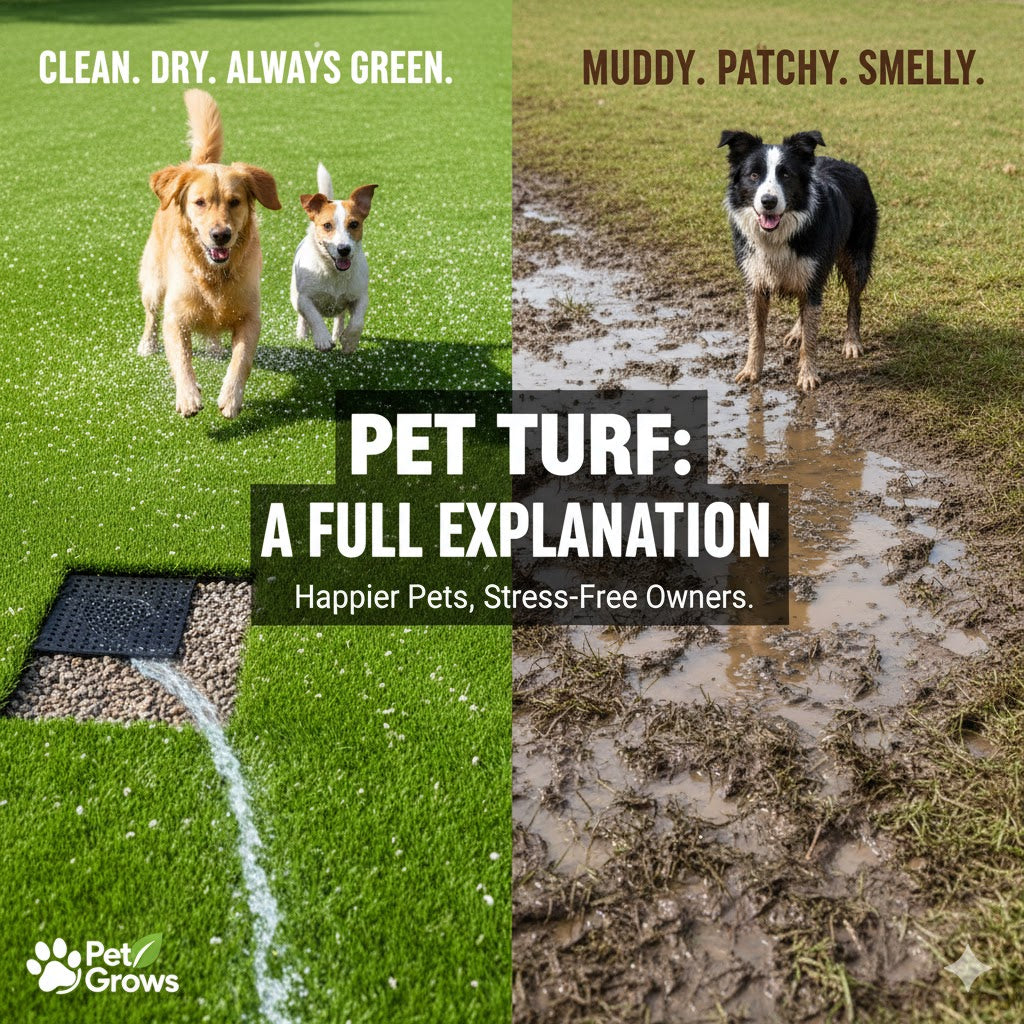
For many dog owners, pet turf is a simple fix for messy yards and constant cleanup. It gives pets a clean space to run and play without mud, bare spots, or the same level of lawn repair. Natural grass can wear down fast and turn brown, but pet turf stays green through heavy use and changing weather. It drains quickly, feels soft under paws, and cleans with regular rinsing.
There is no mowing, heavy watering, or fertilizer needed. You save time, money, and effort while keeping your yard fresh year-round. Pet turf can also help keep your home cleaner by reducing muddy paw prints after rain.
What Is Pet Turf and How Does It Work?
Pet turf is a type of artificial grass made especially for dogs and pet-use areas. It looks like real grass but uses strong synthetic fibers that hold up to running, digging, and daily play. The goal is simple: give dogs a cleaner, softer surface that is easier to maintain than natural grass.
Under the turf is a drainage system that helps water and pet urine move through the surface. This helps keep the yard drier and makes odor control easier. The turf may also use infill material that supports the blades and helps the surface feel more natural.
Why Pet Turf Is Better Than Natural Grass
Pet turf solves problems that natural grass often cannot. Real lawns turn muddy, grow unevenly, and need constant care. Dogs dig holes, leave bare spots, and make cleanup harder after rain. With pet turf, you skip much of that work and still keep a green yard.
No Mud, No Mess
Pet turf does not get muddy like soil and natural grass. Its drainage layer helps move water away, so your dog can get back outside sooner after rain or cleaning. That means fewer paw prints on the floor and fewer patchy spots outside.
Cleaner and Easier to Rinse
Good pet turf drains urine and rinse water quickly. When paired with routine cleaning, this helps reduce odor buildup and keeps the yard easier to manage.
Durable for Daily Dog Use
Pet turf uses strong synthetic grass fibers that are gentle under paws and tough enough for play. It also does not need weed killer or fertilizer to stay green, which can make it easier for pet owners to manage the space.

Components of a Quality Pet Turf System
A strong pet turf system includes several layers that work together to create a durable play area for dogs. Each layer supports drainage, comfort, and long-term use.
Turf Fibers and Pile Height
The top layer of pet turf uses durable turf fibers that look and feel like real grass. A pile height around one inch often works well for dogs because it is soft for paws and easier to clean. Face weight and density also matter because they help the turf hold up under regular play.
Backing and Drainage Layer
Under the turf lies the drainage layer, one of the most important parts of a pet turf system. A permeable backing allows water and pet urine to flow through more easily. This helps reduce odor, bacteria buildup, and soggy spots. For better flow, some installations use Drain Core panels or a French drain under the turf.
Infill Material
Infill sits between the turf blades and supports them. It keeps the surface springy and can help with odor control. Pet-focused infill options such as zeolite or antibacterial sand are often used to help manage smell and surface comfort.
Weed Barrier and Base
A compacted crushed rock base holds everything steady and helps water drain. Some yards include a weed barrier, while some pet installations avoid certain barriers to improve airflow. The right choice depends on the yard, drainage, and installation plan.
How Pet Turf Is Installed
Installing turf takes careful steps to make sure it drains well and lasts for years. Each stage matters for comfort, stability, and durability.
Step 1: Prepare the Ground
Start by removing old living grass, weeds, roots, or concrete flooring. The surface should be clean and level before adding new layers.
Step 2: Build the Base
Spread 3 to 4 inches of crushed rock or decomposed granite to create a solid foundation. Compact it well so the turf does not shift. This layer also helps water drain through the pet turf system.
Step 3: Add a Drainage Layer
Some installations include Drain Core panels or small perforated pipes for better flow. This step helps keep urine and rain from pooling under the turf.
Step 4: Lay the Turf
Unroll the pet turf in the same direction, usually in wide rolls. Trim the edges neatly and line up seams so they blend naturally.
Step 5: Secure the Turf
Use turf nails or adhesive to keep edges tight and flat. Make sure there are no gaps where water can collect.
Step 6: Add Infill and Brush the Fibers
Spread the chosen infill material evenly using a drop spreader. Then brush the turf with a power broom to lift the blades and spread the infill.
Step 7: Final Check
Walk the area, rinse it once, and check that water drains smoothly. Proper turf installation helps pet turf stay clean and comfortable for daily use.

Maintenance Tips for Long-Lasting Pet Turf
Caring for pet turf is simple, but it needs steady attention to stay clean and fresh. A few small habits will keep it looking better for years.
Regular Cleaning Routine
Pick up pet waste every day to avoid smells. Rinse the turf with a hose once or twice a week, especially in dry weather. For pet urine areas, spray with a mild vinegar mix or an enzyme cleaner. This removes residue and helps reduce bacteria buildup.
Seasonal Care
Every few months, brush the turf with a power broom to lift flattened blades and spread the infill material evenly. Check for low spots or thin infill and add more when needed. If you use zeolite or antibacterial sand infill, refresh it as needed for odor control.
Preventing Heat and Damage
Most modern turf includes UV protection to help reduce fading, but you can also rinse it on hot days to cool the surface. Avoid glass reflections or mirrors that can cause heat buildup. If you live in a very sunny area, add shade or mats to protect your dog’s paws. For extra warm-weather guidance, follow the pet heat and safety guidelines from the American Veterinary Medical Association (AVMA).
Where to Use Pet Turf
Pet turf fits almost anywhere dogs play, relax, or train. It is built to handle regular activity and stay easier to clean in different weather.
Backyards and Dog Runs
Many dog owners use pet turf in backyards and dog runs. It helps reduce mud, puddles, and bald spots that natural grass often gets. The drainage system keeps the surface easier to rinse after rain or cleaning.
Dog Parks and Pet Care Facilities
At dog parks or boarding centers, pet-friendly turf solutions can create a clean, soft space for groups of dogs. Turf with suitable infill can help manage odor and cleaning in high-traffic areas.
Indoors, Patios, and Balconies
Pet turf can also work indoors, on patios, or on balconies when drainage is planned correctly. It gives apartment owners or small-space pet owners a patch of green without soil, mud, or heavy upkeep.
Commercial Uses
Turf is also popular in pet grooming and training facilities. It gives pets a durable surface that looks good and is easier for staff to clean.
Choosing the Right Pet Turf for Your Dog
Picking the best pet turf depends on your dog’s habits, your yard’s setup, and how much maintenance you want to do.
Consider Turf Material and Blade Shape
Look for polyethylene turf fibers; they are soft, durable, and comfortable for regular use. Some pet owners prefer turf with textured polypropylene thatch for extra support and a natural look. Avoid thin, low-density turf if your dog runs or digs often.
Check the Drainage System
A fully permeable backing or multi-layer drainage system is best for dogs. It lets pet urine and water flow through more easily, which helps keep the surface cleaner and reduces odor buildup.
Pick the Right Infill Material
Choose an infill suited for pet use, such as zeolite, antibacterial sand, or other odor-control options. Avoid infills that trap heat or smell in your specific environment.
Match Turf to Your Dog’s Activity
If your dog runs and digs often, choose synthetic turf options with strong backing and a shorter pile height. For smaller dogs or shaded yards, a softer low-pile turf can work well and feel gentle under paws.

Final Thoughts
Pet turf is one of the best ways to keep your yard green, clean, and dog-friendly all year long. It helps solve problems that come with natural grass, such as mud, odor, and constant upkeep. With the right infill material and drainage system, it can stay fresh, soft, and comfortable for dogs.
It is not just about looks. Pet-friendly artificial grass can help reduce allergens, save water, and create a cleaner place for dogs to play. Whether it is for home use, dog parks, patios, or pet care facilities, pet turf provides lasting value with less daily effort.
When chosen and installed correctly, turf gives dogs a clean and happy place to play in many types of weather.
Share:
Which artificial grass accessories do I actually need?
How to Choose the Best artificial infill for dogs? A Full Comparison