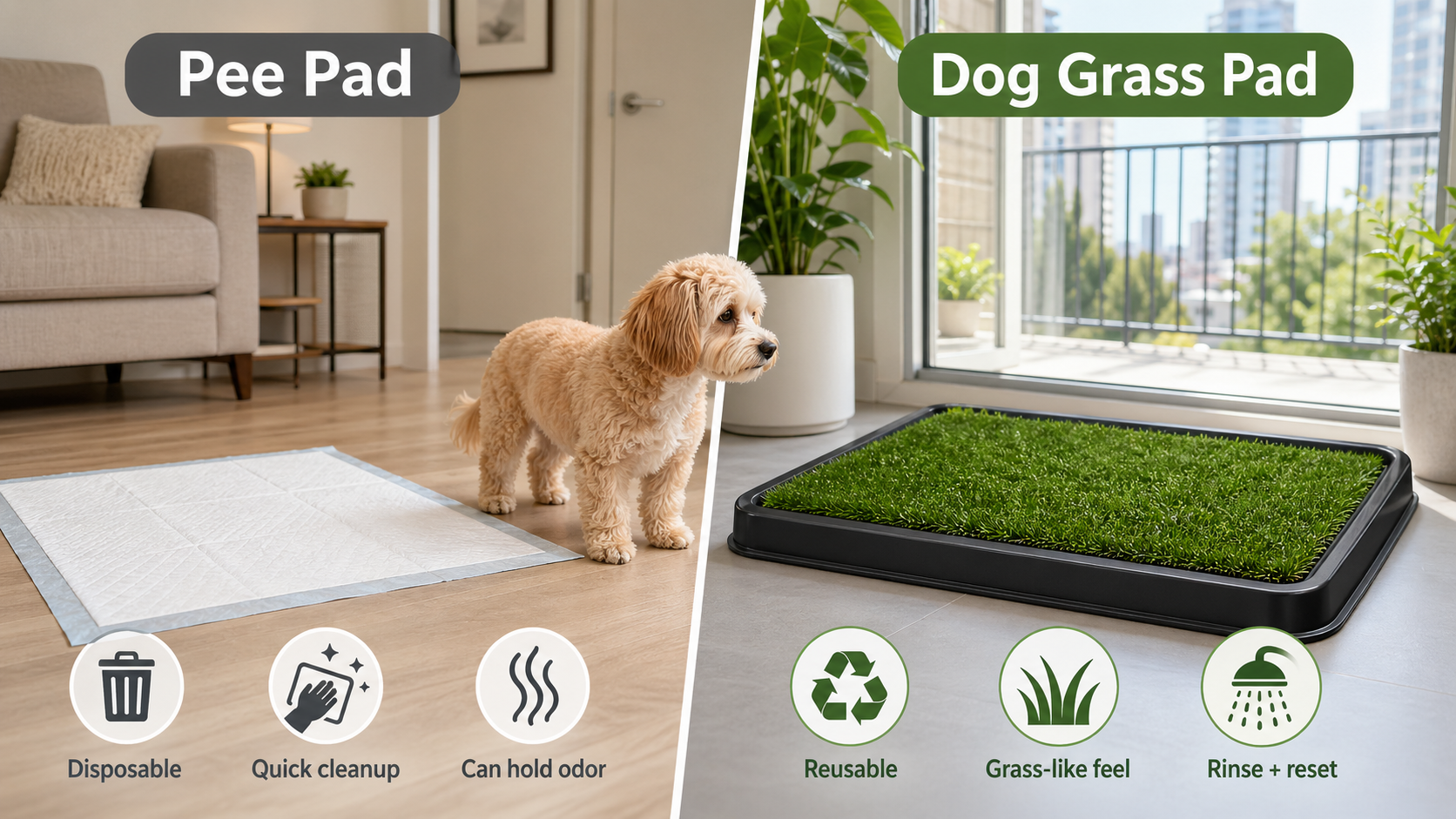
For many apartment dog owners, finding a reliable indoor potty solution is a daily necessity. Urban living often means limited outdoor access, making the choice between dog grass pads and pee pads an important one. Selecting the right option impacts not only your dog's comfort and training but also the cleanliness and odor levels in your home.
Why Apartment Dog Owners Compare Grass Pads and Pee Pads
Apartment dwellers often weigh grass pads against pee pads because each offers a different approach to solving the challenges of city pet ownership. Limited outdoor space, persistent odors, messy cleanup, and concerns about consistent training drive the search for reliable indoor potty solutions for apartment dogs.

Odor and cleanup are not only daily concerns. They shape daily routines and home life.
Grass pads, especially artificial grass solutions for dogs, closely mimic outdoor environments, while pee pads provide a disposable, convenient fix. For a deeper look into the benefits of turf for pets, see our pet turf and its benefits guide.
Pee Pads vs Grass Pads: The Biggest Differences That Matter Day to Day
Choosing between disposable and reusable dog potty solutions means evaluating how each performs where it counts: odor, cleaning, training success, and cost. The following table summarizes the main contrasts:
| Feature | Pee Pads | Grass Pads |
|---|---|---|
| Odor Control | Can trap odors if not changed promptly | Real grass naturally helps neutralize odors, while artificial grass can help when cleaned regularly |
| Cleaning Routine | Simple but frequent replacement needed | Needs rinsing (artificial) or replacement (real) |
| Training Effectiveness | May cause confusion if used long-term | Mimics outdoor potty habits and can support training consistency |
| Environmental Impact | Single-use and contributes to landfill | Reusable or biodegradable options available |
| Cost Over Time | Ongoing expense to restock | Higher upfront cost, but lower recurring cost depending on setup |
Disposable pee pads contribute to landfill waste, which is one reason some pet owners look for more sustainable alternatives.

Pee pads are convenient, but they can cause lingering smells and confusion during house training, while grass pads may provide better odor control and support more instinctive potty habits. For tips on keeping grass pads clean, see our routine for cleaning pet turf.
![]() Cleanup, Smell, and Reset Time
Cleanup, Smell, and Reset Time
It’s no secret that odor is a major concern for apartment residents. Pee pads must be changed frequently to prevent smells from lingering, and skipping a cleaning session can quickly lead to an unpleasant environment. Artificial or real grass pads, when properly maintained, provide better odor control due to natural absorption properties, but do require regular rinsing or replacement.
Using enzymatic cleaners or baking soda can help control odor between full cleanings.
Surface Feel, Tracking, and How Dogs Respond
The feel of the potty surface makes a huge difference in your dog's willingness to use it. Many dogs prefer the texture of grass pads, which closely resemble what they encounter outside. This preference can mean faster adaptation and fewer accidents.
Certain small or senior dogs especially benefit from grass pads’ softer, more natural surface.
Using a surface similar to real grass can support house training because dogs are naturally drawn to grassy textures.
When a Grass Pad Is the Better Fit for Apartment Living
Grass pads shine in situations where routine, odor control, and training consistency are top priorities. For homes with balconies, patios, or small indoor spaces, artificial grass pee pads for dogs offer flexibility and can be used in a variety of settings. Real grass pads, in particular, align with your dog's instincts, making them a great choice for daily, repeat use.
Grass pads are also an ideal solution for owners with unpredictable schedules, since these pads provide a consistent toileting area regardless of weather or building restrictions.
Busy owners or those struggling with persistent smells may find that grass pads simplify maintenance and reduce the risk of accidents. For more on this setup, view our balcony dog grass guide.
What to Check Before Buying a Dog Grass Pad
Making the right purchase means looking beyond just price:
- Size: Make sure the pad is big enough for your dog's breed and comfort.
- Drainage: Good drainage prevents puddles and odors. Look for a reliable base or tray.
- Surface Density: Dense, realistic grass is more appealing and durable.
- Backing Material: Choose non-toxic, pet-safe materials for health and safety. Some artificial grass pads come with removable, machine-washable components for easier maintenance.
- Indoor/Outdoor Fit: Select a pad that matches your available space and intended use.
Monitor your pet for any signs of skin sensitivity or allergies, especially if trying a new material.
For more guidance, see our guide to choosing artificial grass for dogs.
Common Mistakes That Make Either Setup Frustrating
Even the best system can cause headaches if used improperly. The most frequent errors include buying a pad that's too small, failing to clean regularly, or moving the potty area around, which can confuse your dog. Infrequent cleaning is a top reason for persistent odor issues, especially in smaller apartments.
Improper waste disposal can attract pests and, in some cities, violate building policies.
For solutions to odor issues, check out our tips on removing pet odors from artificial grass.
A Simple Decision Guide for Choosing the Right Option
With so many variables, a simple side-by-side can help you choose:
- Speed of Training: Grass pads align with natural instincts and may support faster house training.
- Odor Control: Grass pads, especially real ones, can help keep odors to a minimum when maintained properly.
- Maintenance Needs: Pee pads require frequent changes, while grass pads need scheduled rinsing or replacement.
- Environmental Impact: Grass pads, especially biodegradable or reusable options, are more eco-friendly than disposable pee pads.
- Cost: Consider upfront costs versus ongoing expenses.
For senior dogs or those with mobility issues, indoor grass pads can minimize the strain and risk of slips on slick surfaces.
If a reusable grass setup sounds like a fit for your lifestyle, you can explore the Artificial Grass collection for more options.
Share:
Dog Turf Potty Setup: How to Build a Cleaner Outdoor Potty Area
Dog Grass Pad With Tray: What to Look for Before You Buy