Creating a clean, low-maintenance outdoor dog potty area is a top priority for pet owners who want to protect their lawns and simplify daily routines. With the right planning and materials, especially artificial turf dog potty systems and smart accessories, you can build a designated spot that’s easy to clean, controls odor, and stands up to repeated use. In this guide, you’ll discover how to design and maintain a dog potty zone that fits your needs, using practical strategies for dog potty area maintenance and care.
A dedicated potty area also supports your dog’s routines and keeps the rest of your yard looking better for longer.
What Makes an Outdoor Dog Potty Area Feel Clean and Usable

A truly clean outdoor dog potty area is defined by excellent drainage, minimal odor, and surfaces that are easy to rinse and maintain. Common frustrations like muddy edges, standing water, and lingering smells are usually symptoms of poor planning or the wrong materials. Setting up a turf-based potty zone can help prevent grass burn, odor buildup, and simplify cleanup, while also supporting consistent habits for your dog.
The right setup keeps both your pet and your home cleaner, every day.
Supporting accessories from the Grass Accessories collection can make a big difference in daily upkeep, helping your dog’s spot stay manageable.
For a full breakdown, see Which artificial grass accessories do I actually need?.
Step 1: Choose the Right Location Before Anything Else
It’s a question nearly every dog owner faces: where should the potty area go? The answer matters more than you might think. Choosing the wrong spot can make cleaning a chore and lead to long-term odor issues. Placing the area in full shade with no airflow can contribute to mildew and unpleasant smells, so it’s wise to pick a well-draining spot with some sunlight and good ventilation.
Pick the easiest area to maintain, not just the least visible corner.
If you rent or have an HOA, always check for any rules affecting pet zones or modifications before you start.
For small-space solutions, see Is fake grass for dogs to pee on balcony a good idea?.
Step 2: Build for Drainage First, Then Surface Comfort
Proper drainage is the single most important factor in building a successful outdoor dog potty area. Without it, even the best turf or accessories will quickly become a source of odor and frustration.
Base, Slope, and Water Flow
- Prepare the Base: Start with a compacted layer of crushed stone or gravel to allow fluids to drain away from the surface.
- Create a Slope: A gentle slope (1-2%) directs water away, preventing pooling and promoting faster drying.
- Check Water Flow: Test the area before installing turf to make sure water moves freely.
Skipping this base prep is one of the top reasons owners end up with poor drainage and turf problems.
Where Drainage Mats or Support Layers Help
Drainage mats are especially useful when installing turf over concrete or other hard surfaces where water can’t escape naturally.
Drainage mats from the Grass Accessories collection can help prevent pooling and keep your potty area fresh.
For more tips, see What to put under artificial grass for drainage? and Best Drainage Mat for Artificial Grass: Keep Your Turf Dry and Clean.
Step 3: Choose the Turf Size and Edges With Daily Use in Mind
Choosing the right size for your turf potty area makes sure your dog has enough space to use the spot comfortably and makes cleanup easier. For single, small dogs, a modest patch may be fine, but multi-dog households or larger breeds will benefit from a bigger area.
- Consider your dog’s size and habits: Larger dogs or multiple pets need more space to avoid crowding and mess.
- Edge Security: Secure the turf with landscape staples or turf nails to keep it flat and prevent tripping hazards. Proper edge security also keeps debris from accumulating under the turf.
Look for pet-friendly turf with a pile height around 1.0-1.25 inches for durability and comfort.
For installation details, see the DIY Guide: How to Install Artificial Grass for Dogs in Your Backyard (Step-by-Step).
Step 4: The Accessories That Actually Help
Not every accessory is necessary, but the right ones can make your turf potty area much easier to maintain. Focus on those that solve real problems:
- Weed Barrier: Placed under the turf, it prevents unwanted growth.
- Drainage Support: Essential for installations on hard surfaces.
- Cleaning Tools: Brushes and pet-safe sprays help keep turf fresh. Always pick pet-safe products to protect your pet’s health and cut odor naturally.
- Edge Restraints: Keep turf edges neat and secure.
For more details, see Which artificial grass accessories do I actually need? and Artificial Turf Infill 101: What You Need to Know Before You Buy.
Step 5: Create a Simple Cleaning Routine That Keeps the Area Usable
A regular cleaning routine is the backbone of a long-lasting, odor-free dog potty area. Rinsing the turf potty zone a few times per week and using pet-safe turf spray can help break down organic material and neutralize odor.
Consistent upkeep is what keeps your investment looking and smelling fresh.
Daily removal of solid waste, weekly rinsing with water, and monthly deep cleaning with pet-safe products will keep the area inviting for your dog.
During hotter months, more frequent rinsing can help manage heat and odor.
For more advice, see What’s the best routine for pet turf cleaning at home?.
A Quick Setup Checklist Before You Start
Check local bylaws, HOA, and lease rules for outdoor pet zones.
- Location: Well-draining, easy-access, with some sun and airflow.
- Base: Compacted gravel or stone, with gentle slope for drainage.
- Turf: Sized for your dog(s), secure edges, pet-safe material.
- Accessories: Weed barrier, drainage mat if needed, cleaning tools.
- Routine: Plan for regular rinsing, scooping, and deep cleaning.
Once you know what you need, browse the Grass Accessories collection for setup essentials.
Share:
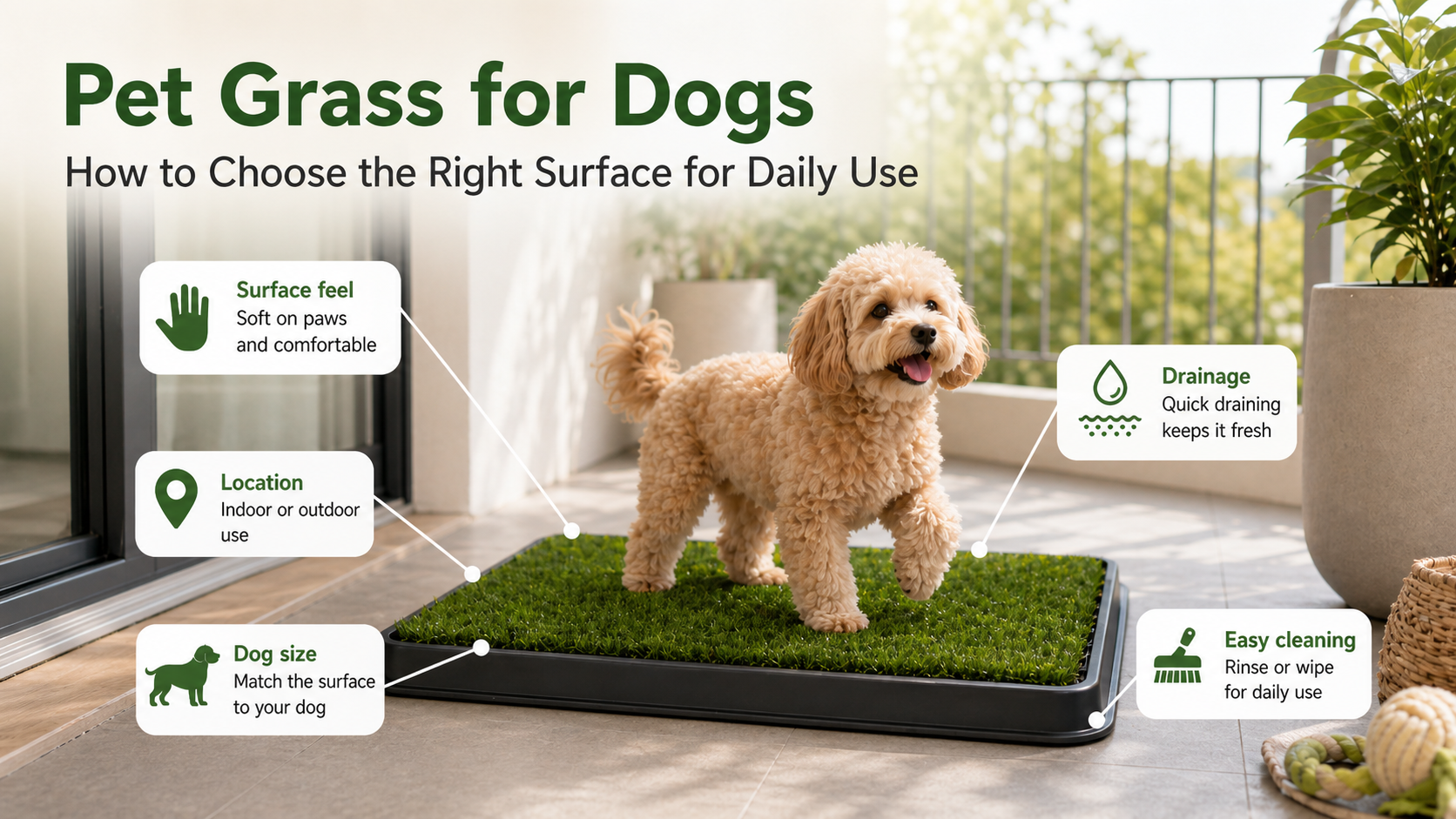
Pet Grass for Dogs: How to Choose the Right Surface for Daily Use
Dog Grass Pad vs Pee Pad: Which Is Better for Apartment Dogs?