Choosing the right size for your dog potty area is the first step to creating a clean, comfortable, and practical space for your pet. Many pet owners underestimate how much space their dog really needs, which can lead to overcrowding, messes, or even reluctance to use the area. By measuring your available space and considering your dog's size and habits, you'll set up a solution that works for both you and your pet’s artificial grass dog potty area.
Throughout this guide, you’ll find actionable tips and expert-backed recommendations to help you get started.

Start With the Space You Actually Have
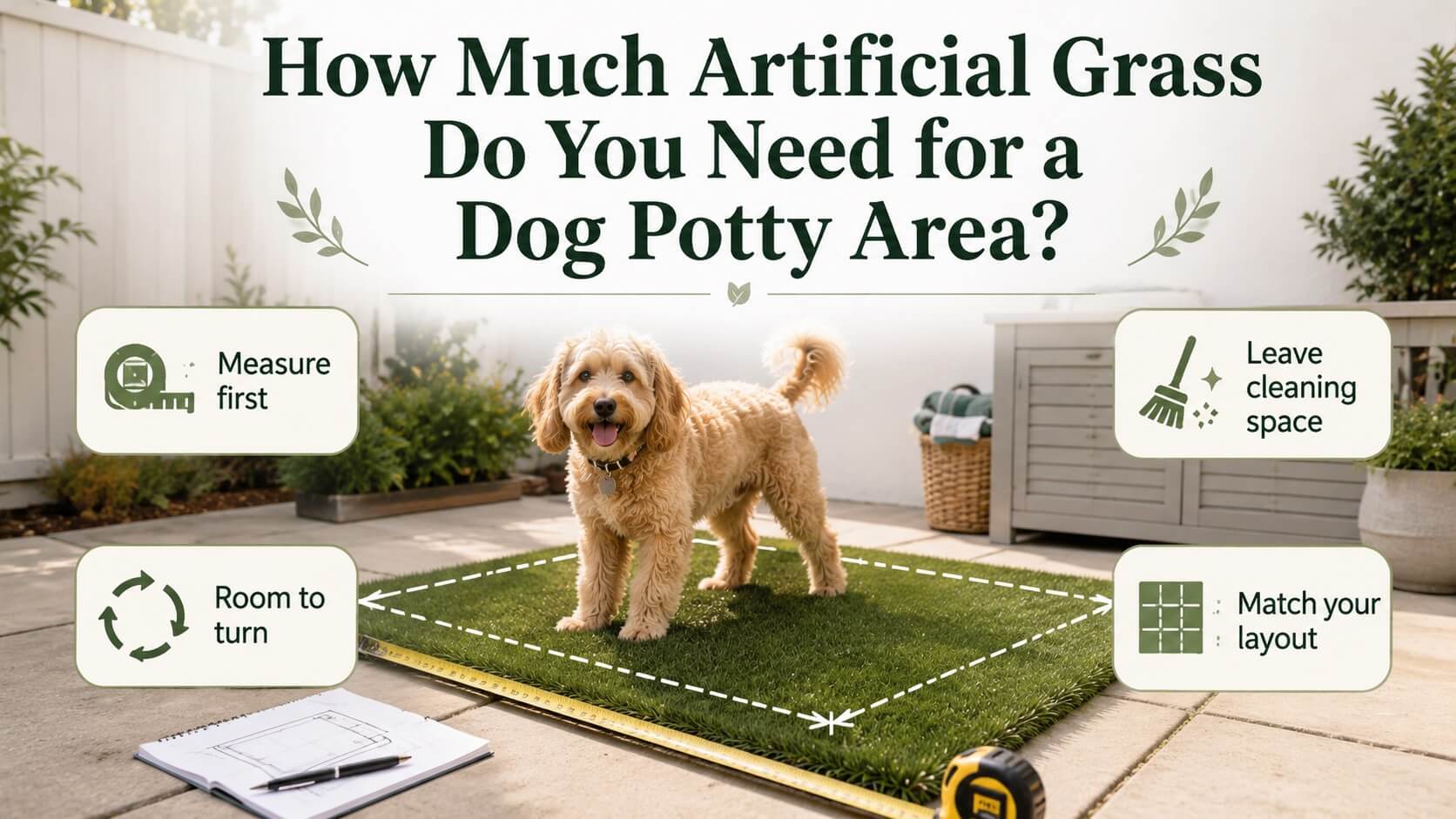
Before shopping for turf, measure both the length and width of the area you plan to convert into a dog potty space... whether it’s a balcony, patio, or a section of your yard. Accurate measurements of both dimensions are essential to achieve proper coverage and fit, and to minimize waste. Before starting your installation, measure the area you want to cover precisely and add a small amount of extra material to both the length and width to allow for trimming and adjustments.
Measuring both dimensions is the foundation of a tidy, well-fitted dog potty zone.
Pet Grows offers custom sizes for many spaces, so whether you have a tiny balcony or a larger backyard, you can find artificial grass trimmed to fit perfectly. Once you have your measurements, you can confidently browse artificial grass options, such as those available in custom sizes from Artificial Grass, to match your unique space and needs.
Match the Turf Size to Your Dog
When it comes to dog potty turf sizing, your dog’s size is just as important as the available space. While there are no universal standards for dog potty areas, kennel and dog run recommendations provide a reliable starting point. As a general sizing reference, for a small dog (less than 10 kg), an area of about 5 m² (approximately 54 sq ft) is suitable; medium dogs (10–25 kg) benefit from 6–8 m² (about 65–86 sq ft); and large dogs (over 25 kg) do best with 8–10 m² (about 86–108 sq ft).
These guidelines ensure your pet has enough room to stand, turn, and move comfortably without feeling cramped. Also consider turf with a pile height of 1 to 1.5 inches for easy cleaning and comfort, as recommended by industry specialists.
If you’re installing turf for multiple dogs, increase the area proportionally to prevent overuse and maintain a healthy environment.
With your measurements in hand, you can browse our artificial grass selection and choose a size that fits both your space and your dog's needs.
Plan for Cleaning Access Around the Potty Area
A functional dog potty area isn’t just about the right size—it’s also about how easy it is to keep clean. When planning the layout, leave enough space to access all sides for rinsing, brushing, and removing waste, especially in corners and along edges. Regular cleaning is recommended by turf installation experts to prevent odor buildup and keep turf quality high.
Enzymatic cleaners can be especially effective for neutralizing odors in high-use areas.
In compact spaces like balconies or patios, consider reviewing tips for balcony dog potty setups to maximize cleaning convenience. Designing with maintenance in mind helps you avoid hassles later and keeps your dog’s potty area fresh and inviting.
Choose the Right Layout for Your Home
Every home is different, so consider which layout works best for your situation—balcony, patio, or side yard. For balconies, a rectangular strip that fits the available width may be the most efficient. Patio layouts can use a corner or near-door setup to keep the area accessible yet discreet.
Be sure to leave enough room for doors to open and close easily, and for people and pets to move comfortably.
Side yards often benefit from a dedicated dog run, allowing your pet to move freely without encroaching on other outdoor spaces. Pet turf is specifically designed for these scenarios, combining durability with realistic texture. To learn more about why pet turf is an ideal choice for dog potty areas, see the pet turf benefits.
Do Not Forget Drainage and the Surface Underneath
Proper drainage is critical for a healthy, odor-free dog potty area. A well-prepared base with adequate drainage prevents water pooling and related hygiene issues. Make sure the base is prepared with adequate drainage to prevent water pooling, which can lead to odors and hygiene issues.
Choosing turf with a fully permeable backing will allow water and pet urine to pass through evenly, helping prevent water pooling and odors.
Install a layer of crushed stone or gravel beneath the turf, and opt for products with permeable backing for best results. For a step-by-step breakdown of what’s required, check out this step-by-step installation guide. Planning your base and drainage ahead of time will help keep your investment fresh and easy to maintain.
A Simple Planning Checklist Before You Buy
Ready to get started? Here’s a quick checklist to guide your purchase:
- Measure both length and width of your available space.
- Consider your dog’s size and allow enough room for comfort and movement.
- Plan for cleaning access on all sides.
- Ensure proper drainage and a permeable base.
- Decide if your area will be permanent or temporary.
- Choose turf that matches your needs and your home’s layout.
- Review manufacturer recommendations and product features for pet-friendliness.
Finally, review warranty information and confirm the turf is designed for pet use.
Once you’ve checked these boxes, browse Artificial Grass options to find the best fit for your project.
Share:
Indoor Grass for Dogs: Is Artificial Turf a Good Potty Solution?
Best Grass Alternatives for Dogs: What to Use Instead of a Traditional Lawn