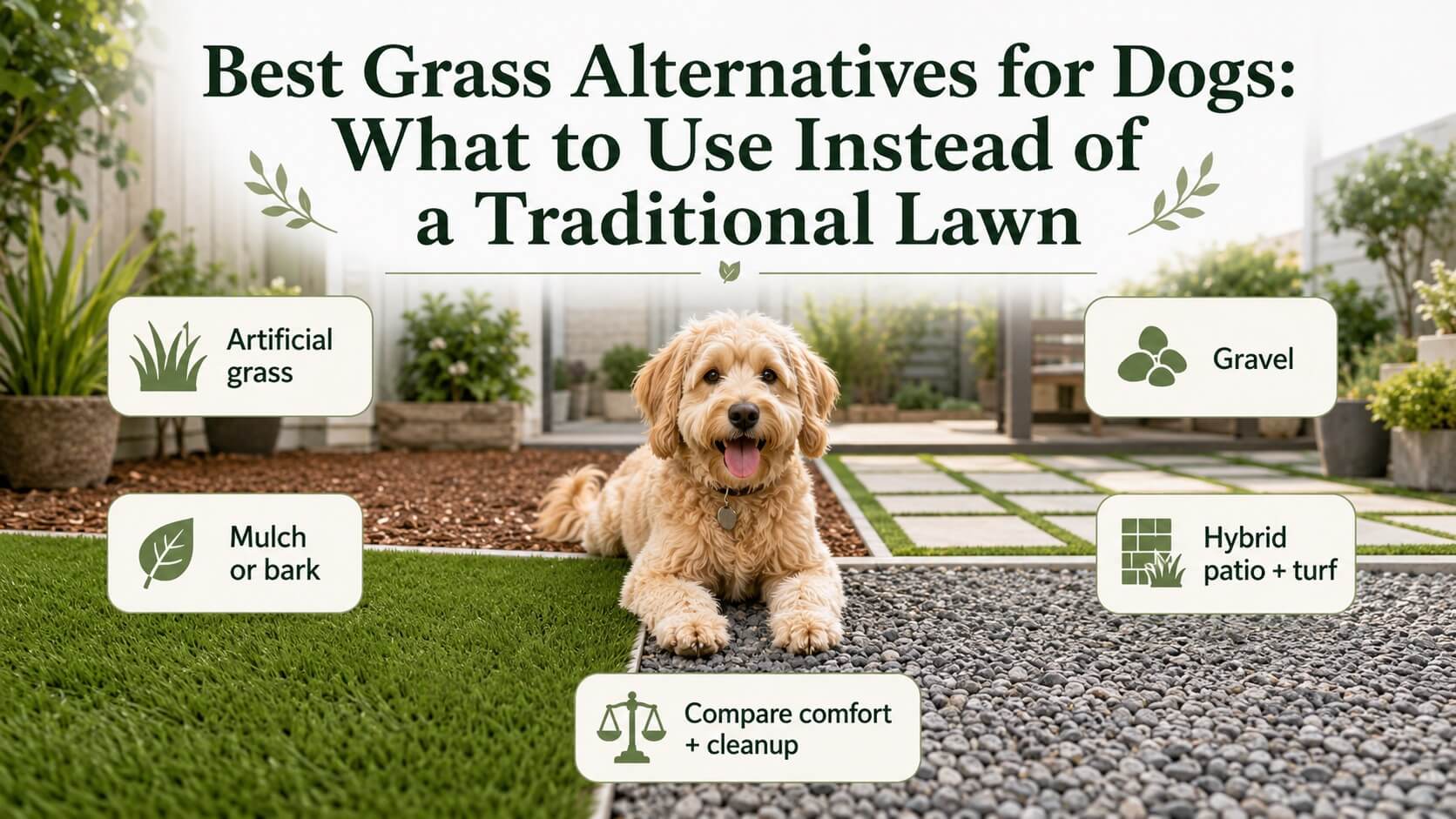
With the rising costs and maintenance challenges of natural lawns, more pet owners are exploring dog-friendly lawn alternatives for muddy yards, urine spots, allergies, and easier upkeep.
Traditional grass lawns can create persistent issues for pet owners—including muddy paw prints, urine-damaged spots, and recurring allergy flare-ups for both dogs and their people, especially during wet seasons or in homes with multiple dogs. As Dr. Georgina Ushi, DVM, explains, natural lawns often become muddy, harbor allergens, and are susceptible to unsightly patches from pet urine.
For many, the search for a low-maintenance, pet-friendly outdoor space starts with these everyday frustrations.
 This is why so many are now considering artificial grass for dogs as well as other innovative surfaces—especially in climates with frequent rain, or where allergies make natural grass a challenge.
Artificial Grass for Dogs—A Low-Maintenance Solution
Artificial grass continues to gain popularity as a leading alternative for dog owners seeking a low-maintenance dog yard option. The appeal is clear: artificial turf eliminates mowing, watering, and fertilizing, offering consistent durability and a clean play surface for pets year-round.
Here’s how pet-friendly artificial grass solutions stand out:
- No more mud or mess: Surfaces stay clean even after heavy rain.
- No patchy spots: Synthetic turf resists damage from dog urine and heavy use.
- Time and cost savings: Maintenance tasks like mowing and fertilizing are eliminated, freeing up more time for pet owners.
Artificial turf also reduces injury risks for pets caused by uneven or muddy lawns and often features built-in drainage systems and antimicrobial infill to control odors and bacteria.
Pet-friendly artificial grass solutions can help create a cleaner, more consistent yard surface for dogs.
Mulch, Wood Chips, and Bark—Natural-Looking Alternatives
Are wood chips and bark safe for dog yards? Cedar mulch is commonly recommended because it naturally repels fleas and is generally safe for dogs, while cocoa mulch should always be avoided due to its toxicity.
Always verify that mulch is non-toxic and free of harmful chemicals before using it in a pet area.
Regular maintenance—such as checking for mold, fungi, or pests—helps keep these natural materials a safe and pleasant ground cover. Replacing mulch as it decomposes or compacts helps maintain safety and cleanliness in pet areas.
For a comparison with pet-specific turf, see our pet turf benefits explainer.
Gravel, Pea Gravel, and Rock Surfaces—Durability vs. Comfort
Gravel and pea gravel are frequently chosen for dog runs thanks to their excellent drainage and low maintenance needs. Liquid waste drains quickly through gravel, keeping the area cleaner for pets.
However, Dr. Georgina Ushi, DVM, cautions that gravel can become too hot in the sun and may get stuck in dogs’ paws, making it less comfortable unless shaded and monitored for sharp stones.
Providing shade over gravel areas can help prevent them from becoming too hot for dogs to walk on.
| Pea Gravel & Rock | Other Surfaces | |
|---|---|---|
| Drainage | Excellent | Varies |
| Comfort | Can be harsh on paws | Softer (mulch, turf, clover) |
| Maintenance | Minimal, easy to clean | Varies |
| Heat | Can get hot in sun | Depends on material |
When considering pea gravel for dog runs, test a small area first to see if your dog finds it comfortable.
Clover, Ground Covers, and Mixed Yard Surfaces
Some owners still want a green, living yard. White clover is incredibly tough, stays green even in moderate drought, and handles heavy traffic from both feet and paws. Clover also fixes nitrogen in the soil, reducing the need for fertilizer, and is less likely to trigger allergies in sensitive dogs.
Regular cleaning can help reduce pollen and allergen accumulation on living ground covers.
Living alternatives like clover can reduce allergens and survive where grass fails.
Still, maintenance routines and climate considerations will affect how well clover lawn for dogs performs. For a full list of benefits, see our guide to the benefits of artificial grass for dogs.
Concrete, Pavers, and Patio Zones with Turf Areas
Hybrid setups—combining hardscape and turf—are increasingly popular among pet owners. These layouts, such as patios with a turf potty area or dog run, balance easy cleaning with comfort. Mixed-surface layouts can help balance durability, easy cleanup, and pet comfort.
- Hardscape zones: Simple to clean, great for high-traffic or messy areas
- Turf/potty zones: Offer comfort and a familiar surface for dogs
- Artificial turf sections can also provide a low-slip area, which is helpful for active pets.
When planning concrete vs. pavers for dog yards, make sure at least part of the area offers a softer material for play and comfort. To see how artificial grass fits into hybrid setups, read why it’s the perfect choice for pet owners.
How to Choose the Best Grass Alternative for Your Dog
Choosing the right surface depends on your dog’s habits, your local climate, and your cleaning routine:
- Assess your dog’s needs: Consider digging, chewing, or potty habits.
- Think about allergies: Dogs with grass allergies may benefit from artificial turf or clover.
- Factor in maintenance: Artificial turf and gravel are low-maintenance; living ground covers require more care.
- Evaluate climate: Some materials, like turf and clover, handle drought and heavy rain better than others.
- Test surfaces: Let your dog walk on a sample area to check for comfort and preference.
If you want a low-maintenance, pet-focused surface that works in most climates, explore our artificial grass collection for more options.
Frequently Asked Questions About Dog-Friendly Lawn Alternatives
Q: What is the safest mulch for dogs? A: Cedar mulch is safe and repels fleas. Avoid cocoa mulch, which is toxic to dogs.
Q: Can artificial turf help with pet allergies? A: Yes, artificial turf provides a hypoallergenic surface, reducing exposure to natural grass allergens.
Q: How should I prepare my yard for a new surface? A: Remove any toxic plants or hazardous debris, and make sure there is good drainage—fully permeable backing or a well-designed base layer is ideal—before installing any new ground cover.
For more answers, visit the PetGrows FAQ.
Share:
How Much Artificial Grass Do You Need for a Dog Potty Area?
Best Artificial Grass for Puppies: What New Dog Owners Should Know