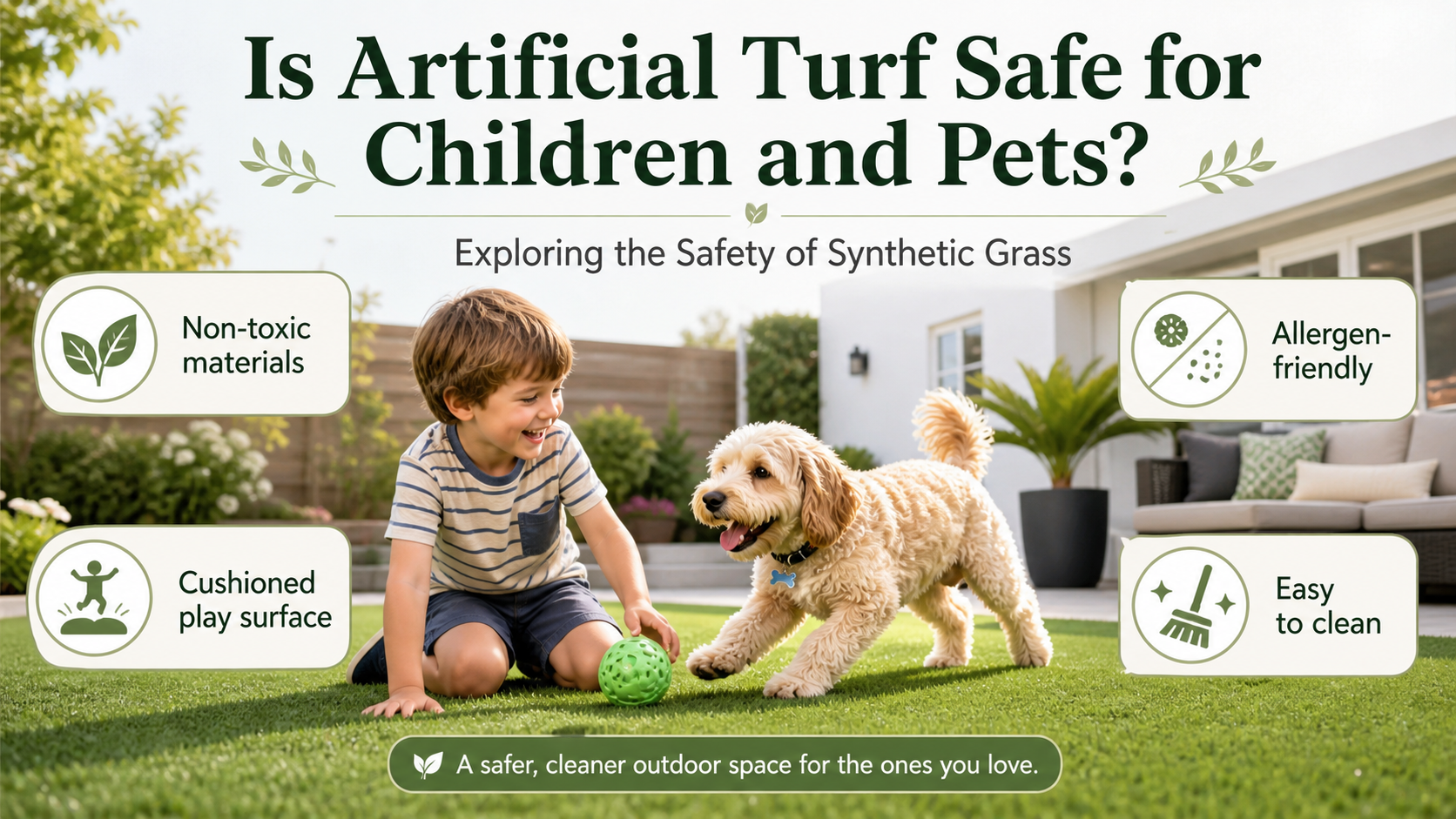
Artificial turf is now used in homes, pet areas, playgrounds, sports fields, and commercial spaces. It offers many practical benefits, but safety is still one of the first questions families ask before buying. If children or pets will use the surface every day, it is important to understand the materials, heat behavior, drainage, infill, and cleaning needs.
When properly selected, installed, and maintained, artificial turf can be a safe and practical option for pets and kids. The key is choosing quality turf, checking product details, and caring for the surface so it stays clean and comfortable.
Understanding the Safety of Synthetic Grass
Materials Used
Modern artificial turf is commonly made from materials such as polyethylene, polypropylene, and nylon. These materials are used because they are durable, flexible, and able to handle outdoor conditions. For families and pet owners, the important step is to check that the product is designed for residential, pet, or play use and that the manufacturer provides clear product safety information.
If pets or children will be playing on the turf, look for product details related to lead-free materials, backing, drainage, and infill compatibility. Avoid making assumptions based only on appearance, because turf products can vary widely.
Infill Considerations
Infill is placed between artificial grass blades to help support the turf, improve stability, and keep the surface looking natural. Some older infill options, such as crumb rubber, have raised concerns for families who want a cleaner pet or play area.
For pets and kids, consider infill options that are designed for residential or pet use. Sand, zeolite, antimicrobial infill, or other pet-focused materials may be better fits depending on the installation. The best choice depends on drainage, heat, odor control, and how the space will be used.
Heat Management
One common concern with fake turf is heat. Artificial grass can get warmer than natural grass in direct sun, especially during hot weather. This matters for pets, children, and anyone walking barefoot on the surface.
To manage heat, choose turf with UV resistance, create shaded areas, rinse the surface when needed, and avoid using turf in places where reflected heat from glass or metal concentrates on the lawn. Pet owners should always check the surface temperature before letting dogs play during very hot conditions.
Allergens
Synthetic grass does not grow pollen the way natural grass does, which may be helpful for people with grass allergies. It also avoids mowing, which can stir up pollen, dust, and clippings.
That said, outdoor debris can still collect on turf. Leaves, pollen from nearby plants, dust, and pet hair should be removed regularly to keep the surface cleaner for kids and pets.
Cleaning and Hygiene
Artificial turf should be kept clean for comfort and hygiene. Brushing, rinsing, and removing debris helps prevent buildup. In pet areas, solid waste should be removed quickly, and urine areas should be rinsed or cleaned with a pet-safe cleaner when needed.
Good drainage also matters. Turf used by dogs should allow urine and rinse water to move through the backing and into the base below. Without proper drainage, odor and residue can build up over time.
Why PetGrow Artificial Grass Can Be a Practical Choice
Durability
Artificial grass is designed to handle regular use. For families, that means it can support play, foot traffic, and outdoor activity without the mud, bare patches, and uneven wear that often happen with natural grass.
Realistic Appearance
Modern synthetic turf can look and feel more natural than older products. A realistic blade shape, thatch layer, and proper pile height can make the yard more comfortable and attractive while still keeping maintenance lower than natural grass.
Lower Lawn Chemical Use
Because artificial turf does not need fertilizer, weed killer, or routine pesticide treatments to stay green, it can help reduce lawn chemical use around pets and kids. This is one of the reasons many families consider turf for play areas or pet spaces.
Pet-Friendly Use
For dogs, the right turf can create a cleaner place to play or use as a potty area. Look for pet-friendly artificial grass with strong drainage, durable fibers, and a cleaning routine that fits your home. This helps reduce mud, paw mess, and bare patches while keeping the area easier to maintain.
Versatility
Artificial turf can be used in backyards, pet play areas, patios, balconies, and some recreational spaces. The safest setup depends on the location, drainage, base layer, expected foot traffic, and whether pets or children will use the surface often.
What to Check Before You Buy
- Choose turf designed for the intended use, such as pets, play, or landscaping.
- Check for lead-free or other published product safety details.
- Review backing and drainage specifications.
- Choose infill carefully, especially for pets and kids.
- Plan shade or cooling steps for hot sunny areas.
- Clean and rinse the turf regularly, especially in pet-use zones.
Conclusion
When properly selected and cared for, artificial turf can be a safe and practical option in place of natural grass for many families. PetGrow artificial grass can support a cleaner, lower-maintenance outdoor space when the right product, installation, drainage, and cleaning routine are used.
Share:
Best Drainage Mat for Artificial Grass: Keep Your Turf Dry and Clean
The Ultimate Guide to Choosing Artificial Turf Seam Tape for Your PetGrows™ Lawn