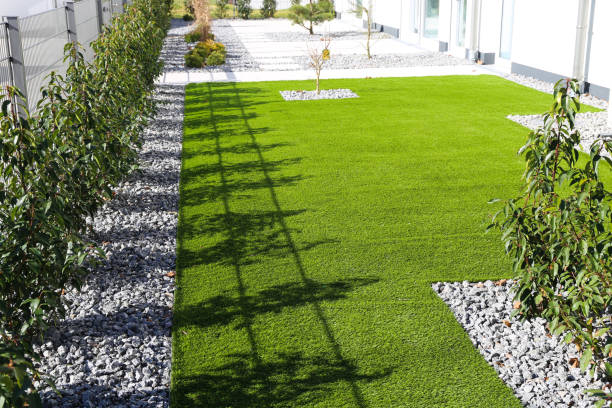
Artificial grass can be installed in a variety of outdoor and event spaces. It is comfortable, realistic, durable, and easy to use when you want to create a green area without the maintenance needs of natural grass. But many homeowners still wonder: is fake grass flammable?
The short answer is that quality artificial turf is generally designed to resist ignition, but it can still melt, scorch, or become damaged when exposed to high heat, embers, flames, grills, or fire pits. That means fire safety still matters, even if the turf does not behave like dry natural grass.

Can Artificial Grass Catch Fire?
Artificial grass is made from synthetic materials such as polyethylene or polypropylene. These materials are durable for outdoor use, but like many plastics, they can melt or burn when exposed to very high temperatures.
In normal use, quality fake grass is not something that should easily burst into flame. However, hot charcoal, fireworks, burning embers, cigarettes, or direct flame can damage the surface. Even if the fire does not spread across the lawn, the heat may leave melted patches or permanent marks.
Fire Resistance vs. Melting
It is important to separate fire resistance from heat damage. Fire-resistant artificial grass may help slow ignition or reduce flame spread, but that does not make it heat-proof. A hot ember from a fire pit may not set the whole surface on fire, but it can still melt the turf fibers and ruin the appearance of the area.
Since artificial grass can melt, it is best to keep grills, fire pits, patio heaters, and other heat sources a safe distance from the lawn. It is also smart to avoid smoking directly on synthetic turf.

What Affects the Flammability of Fake Grass?
Several factors can affect how artificial turf reacts to heat or flame:
- Material composition: Turf fibers and backing materials vary by product. Some materials can melt or deform faster than others.
- Fire ratings: Some turf products are tested or treated for fire resistance. If fire safety is a concern, check the product details before installation.
- Installation practices: Keeping turf away from ignition sources and using appropriate base materials can help reduce risk.
- Surrounding environment: Dry leaves, nearby vegetation, furniture, and outdoor décor can increase fire risk around the turf.
- Maintenance: Removing debris and keeping the area clear can reduce the chance of accidental burning.
How to Protect Artificial Grass From Fire Damage
Prevention is always the best approach. A few simple habits can help protect your synthetic lawn:
- Place grills, fire pits, and heaters on a non-flammable surface, not directly on turf.
- Keep hot charcoal, ashes, and embers away from the grass.
- Avoid smoking on the turf.
- Clear dry leaves, paper, and flammable debris from the area.
- Keep a bucket of water, sand, or a suitable fire extinguisher nearby when using outdoor heat sources.
A bucket of water or some sand can help stop small flames before they cause more damage. In an emergency, use the appropriate fire extinguisher and follow local fire safety guidance.
Can Melted Fake Grass Be Repaired?
In many cases, fake grass can be repaired if one or more small areas melt or scorch. A damaged section may be cut out and replaced with a patch of matching turf. If the damage is widespread, replacing the full section may be the better option.
Final Thoughts
Fake grass is not the same as dry natural grass, but it still needs fire-safe use. Quality artificial turf is generally designed to resist ignition, yet it can melt or become permanently damaged when exposed to high heat. Keep grills, fire pits, cigarettes, fireworks, and hot embers away from the turf, and choose products with suitable fire-safety information when installing grass near event spaces, patios, or outdoor entertainment areas.
Share:
How to Attract Birds to Your Yard With Artificial Grass
Questions about artificial turf