Artificial turf is popular today because it looks neat and stays green all year. But there is one big problem many homeowners do not expect. Artificial grass can get extremely hot in the sun. Sometimes it gets so hot that you cannot walk on it, and your pets avoid it too. There is a simple solution called turf cooling infill.
In this article, we will explain what turf cooling infill is, how it works, and why it can make your lawn much safer and more comfortable. By the end, you will know exactly if this upgrade is right for your yard.
Understanding Artificial Turf and the Role of Turf Cooling Infill
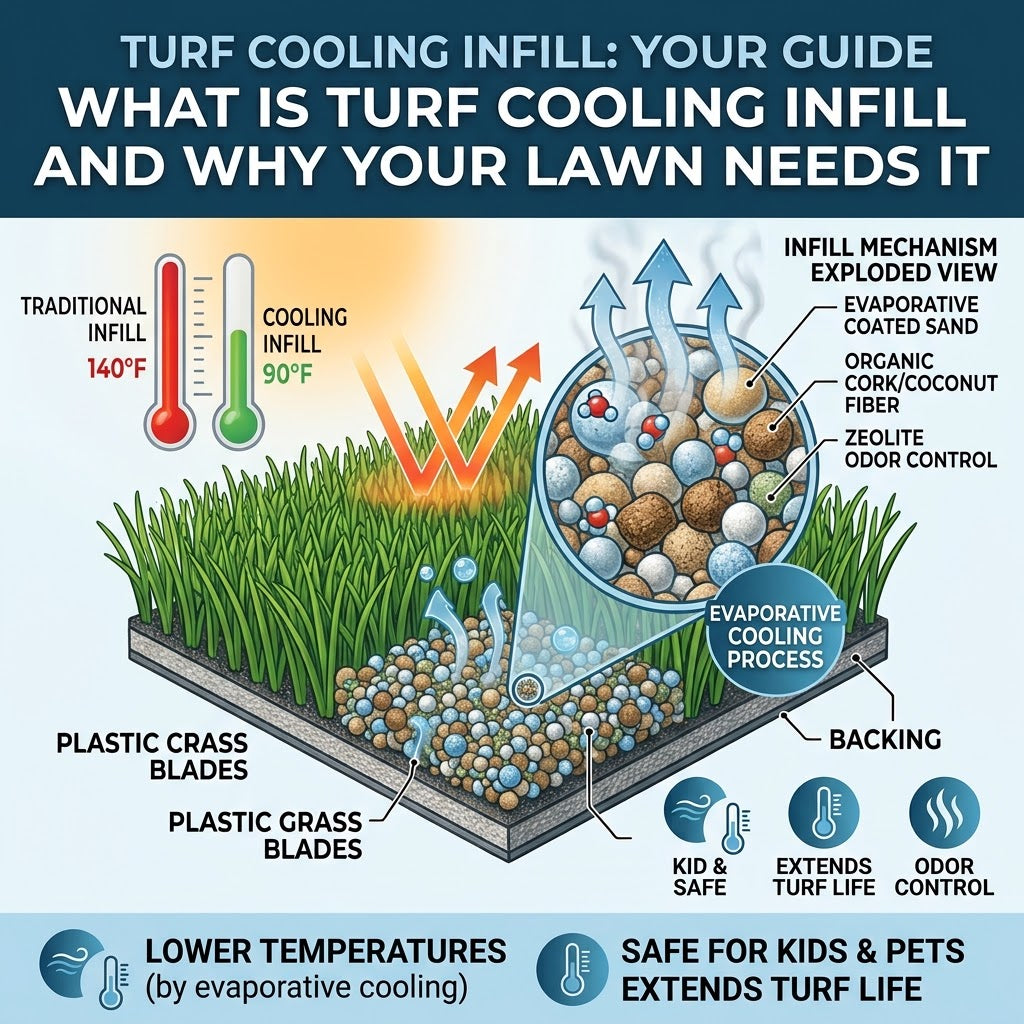
Before we talk about turf cooling infill, let’s look at how an artificial turf system works. Artificial grass is not just green plastic rolled on the ground. It has several layers that help it look real and stay in place.
Here are the main parts:
-
Backing layer: This holds the turf together.
-
Plastic grass blades: These give the turf its color and texture.
-
Infill: Small granules that sit between the blades.
The infill is very important. It pushes the blades upright so they do not lie flat. It also adds weight so the turf does not move or wrinkle. Infill makes the ground feel softer too. Most turf systems depend on infill to look and feel right.
Traditional infills include silica sand or black rubber crumbs. They do a good job supporting the grass. But they have one major problem. They absorb heat and hold it. On sunny days, these infills make turf much hotter than natural grass. This is why many yards with regular infill become uncomfortable or even unsafe in summer.

How Turf Cooling Infill Works to Keep Your Lawn Cooler
Turf gets hot because it is made of plastic. Plastic absorbs heat, especially when the sun hits it for hours. Traditional infills, like rubber, also get hot. This heat rises from the ground and warms the turf even more. The surface can reach very high temperatures.
Turf cooling infill works in a smarter way. Most cooling infills use evaporative cooling. This means the infill absorbs water from rain or light watering. Later, when the sun heats the turf, the stored water slowly evaporates. Evaporation removes heat from the surface. It works the same way sweat cools your skin.
Some cooling infills are made from materials that stay naturally cooler. For example, cork and coconut fibers do not hold heat like rubber. Other infills are coated with special treatments that reflect sunlight or attract moisture.
Here is what turf cooling infill can do:
-
Lower turf temperature by 30 to 50 degrees in many cases
-
Keep the surface safe for kids and pets
-
Reduce heat buildup during long sunny afternoons
To get the best cooling results, you may need to lightly water the turf during very dry days. But most cooling infills still reduce heat even without water.
Key Benefits of Turf Cooling Infill for Families, Pets, and Curb Appeal
Choosing turf cooling infill offers several real-world benefits. These benefits matter whether you have kids, pets, or simply want a yard you can enjoy every day.
1. It makes your lawn more comfortable
When turf becomes too hot, you lose the chance to enjoy your lawn in the middle of the day. Kids cannot sit on it. You cannot walk on it without shoes. Pets stay far away.
With turf cooling infill, the surface stays much cooler. You can step outside and use your lawn whenever you want. You can relax or play outside without worrying about heat.
2. It keeps kids and pets safe
High temperatures can burn bare skin or paws. Dogs feel pain quickly when their feet touch hot turf. Children can also get hurt if they fall or sit on hot surfaces.
Turf cooling infill lowers the temperature and helps prevent burns. This makes your lawn a safer place for your family. Many cooling infills also include odor-control or antimicrobial features. These help keep your turf cleaner, which is great if you have pets.
3. It helps your turf last longer
Heat damages plastic over time. Hot turf becomes brittle and fades faster. If your turf stays too hot for months each year, it may not last as long as you expect.
4. It improves the look and feel of your yard
Cooling infill helps the blades stay upright. It also makes the surface feel softer underfoot. Your lawn will look more natural and feel better to walk on.
It also helps reduce the “heat island” effect. This happens when hot turf warms the air around your patio, porch, or windows. Cooler turf makes your outdoor space more enjoyable.

Types of Turf Cooling Infill: Which Option Is Best for Your Yard?
Not all turf cooling infills work the same way. Each type has benefits and drawbacks. Picking the right one depends on your climate, your budget, and how you use your lawn.
1. Evaporative coated sand
This is one of the most common cooling infills. It is regular sand coated with a special treatment that absorbs and releases water.
Pros:
-
Strong cooling effect
-
Works well in most climates
-
Good for families and pets
Cons:
-
Needs occasional watering to stay effective
-
Costs more than regular silica sand
2. Organic infills (cork, coconut, or blended mixtures)
These infills come from natural materials. Cork and coconut fibers stay cooler because they do not absorb heat like rubber.
Pros:
-
Very good cooling
-
Soft and natural feel
-
Eco-friendly and safe
Cons:
-
Can dry out in very hot areas
-
May break down slowly over the years
3. Advanced elastomer infills (TPE)
These small pellets are made of special plastic designed to stay cooler than black rubber.
Pros:
-
Good cooling compared to rubber
-
Strong and long-lasting
-
Recyclable
Cons:
-
Usually more expensive
-
Not as cool as organic or evaporative infills
4. Mineral and odor-control infills (like zeolite)
These are popular for homes with dogs. They help reduce the smell of urine while offering mild cooling.
Pros:
-
Great odor control
-
Good for pet runs
Cons:
-
Cooling is not as strong as other infills
-
May need to be refreshed over time
Which infill should you choose?
-
For hot, sunny homes → evaporative coated sand or organic infill
-
For pet yards → zeolite or a blended cooling + odor option
-
For family play areas → organic infill or coated sand
- For small, low-use spaces → coated sand or TPE works fine
How to Choose and Install Turf Cooling Infill the Right Way
Here are the key steps to choosing the right infill and making sure it works well.
1. Think about your climate
Hot and dry climates need infills that work even without a lot of moisture. If you live in a dry region, coated sand or TPE may be better. If you get regular rain, organic infills will work very well.
2. Check your sun exposure
If your turf gets full sun for most of the day, cooling infill is almost required. If it only gets morning or evening sun, you may not need the strongest cooling option.
3. Know the main use of the area
A dog run needs odor control. A backyard play space needs soft and safe infill. A decorative strip near a driveway may not need cooling at all.
4. Ask your installer the right questions
Here are some questions to ask:
-
What infill options do you offer?
-
Which one works best in my climate?
-
How much turf cooling infill do you recommend per square foot?
-
How often will I need to maintain or top it up?
A good installer will answer clearly.
5. Understanding how installation works
Here is the basic process:
-
Spread the infill evenly over the turf
-
Use a power broom to sweep it into the grass
-
Check the depth to make sure it supports the blades
-
Add more if needed until it reaches the recommended level
This process helps the turf last longer and look better.
6. Simple maintenance tips
Turf cooling infill does not need much work. Here are a few easy tips:
-
Lightly water the turf on very hot days for best cooling
-
Brush the turf every few months to keep infill even
-
Add a little more infill every couple of years, if needed
Is Turf Cooling Infill Worth It? Cost, ROI, and Real-World Results
Many homeowners wonder if upgrading to turf cooling infill is worth it. The cost is usually a bit higher than regular infill. But the benefits can be big.
1. Cost
Cooling infill usually costs more per bag than basic silica sand. But you do not need a huge amount for most yards. The added cost is often small compared to the total turf installation price.
2. Comfort and safety
If you have kids or pets, the extra cost is worth it. You can actually use your lawn during the day without worrying about burns or discomfort.
3. Longer turf life
Hot turf breaks down faster. If cooling infill helps your turf last several years longer, it saves money. Turf is not cheap, so anything that protects it is helpful.
4. Real examples
Here are some common situations:
-
Backyard play area: Kids can play freely without burning feet.
-
Pet zone: Dogs enjoy the space more, and odor control makes life easier.
-
Poolside turf: Cooling infill makes the turf comfortable even after long sun exposure.
- Rooftop deck: These spaces get very hot. Cooling infill makes a huge difference.
Conclusion: Making Your Artificial Lawn Comfortable All Year Long
Artificial turf can get very hot, but you do not have to live with that problem. Turf cooling infill keeps your lawn cooler, safer, and much more enjoyable. It protects your turf and helps you use your outdoor space all year.
If you plan to install new turf, or if your current turf gets too hot, cooling infill is a smart upgrade. Talk to a turf installer or turf supplier and ask about the cooling options available for your yard.
Your lawn should be a place you enjoy. Turf cooling infill helps make that possible.
Share:
Artificial grass edging: how to keep turf edges clean and secure
Best turf odor eliminator for pet-friendly artificial grass