Artificial grass looks great. It saves time, water, and effort. But it only works well when it stays dry, clean, and fresh. Without good drainage, artificial turf traps water. Moisture builds up under the surface. Then you get puddles, smells, and even mold.
The good news is simple. A drainage mat for artificial grass can fix almost all these problems. It sits under the turf and helps water move away fast. It also adds airflow and keeps your turf cleaner.
In this guide, I’ll walk you through how drainage mats work, why they matter, the best types, and how to choose the right one. I will also show you the top options and how to install them. By the end, you’ll feel confident picking the best system for your space.
1. Why Drainage Matters for Artificial Grass
Artificial turf may look like real grass, but it drains differently. Real soil absorbs water and lets it move down. Turf does not do that on its own. Water has to pass through the backing and then flow somewhere else.
If the water sits under the turf, it causes trouble.
You might see:
-
Wet spots that never dry
-
Bad smells from trapped bacteria
-
Slippery surfaces
-
Turf backing that breaks down faster
-
Pet urine that stays under the surface
A drainage mat underneath stops all of these issues. It creates a small space for water to flow and air to move. This simple layer keeps the turf dry, clean, and easy to maintain.
2. What Is a Drainage Mat for Artificial Grass?
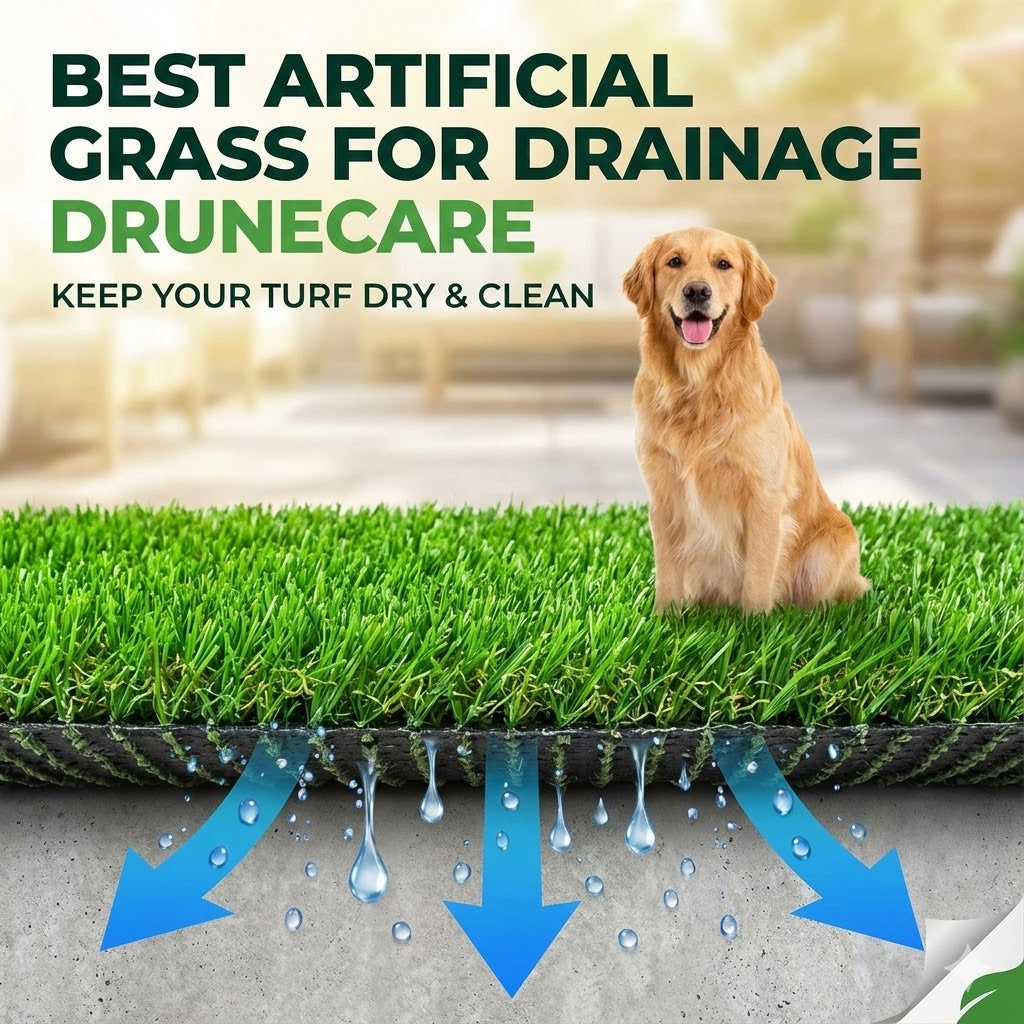
A drainage mat for artificial grass is a layer placed between the turf and the ground. This mat lifts the turf off the surface. When it does this, it creates a gap that lets water drain fast. That gap also allows air to circulate, which helps dry out moisture and reduce odors.
Most mats use a plastic grid, dimples, or a 3D mesh. These shapes create channels. Water drops through the turf, enters these channels, and flows away. The mat also protects the turf backing from rubbing against concrete or rough surfaces.
Some mats come in tiles that snap together. Others come in rolls that unroll across large areas. Many are made from recycled plastic and can handle rain, wind, and heavy use.
3. Benefits of Using a Drainage Mat for Artificial Grass
Using a drainage mat adds several real benefits to your turf setup. Here are the most important ones.
1. Faster water flow
Water leaves the surface quickly. You won’t see standing puddles, even during heavy rain.
2. Cleaner turf
When water drains well, dirt and bacteria wash away more easily. The turf stays fresher.
3. Better odor control
This is huge if you have pets. A drainage mat for artificial grass stops urine from soaking into one spot. Airflow helps break down odor.
4. Longer turf life
Moisture must not stay under turf. It weakens the backing. Drainage mats keep the area dry and protect the surface.
5. Safer play areas
Some mats add shock absorption. This is useful for kids, pets, and sports use.
6. Works on hard surfaces
You can install turf on concrete, rooftops, balconies, and patios when you use a drainage mat. No soil needed.

4. The Science Behind Turf Drainage
Turf drains from top to bottom. Rain or water passes through the artificial grass backing. But if the surface underneath does not drain, water gets stuck. That’s where the mat helps.
Most mats have:
-
Air voids that hold air and let water pass
-
Channels that guide water sideways
-
Open structures that don’t block flow
-
Strong walls that don’t collapse under weight
A good mat also works with very little slope. This makes it perfect for balconies or roofs that cannot be changed. The mat also makes rinsing easier. When you spray water across your turf, the bottom layer clears out fast.
For pet owners, this matters a lot. Urine can soak into turf without airflow. A drainage mat creates airflow and movement. This prevents strong odors from forming.
5. Types of Drainage Mats for Artificial Grass
There are several styles of mats. Each one has its own strengths. Choosing the right type depends on your space, pets, and goals.
A. Geocell Drainage Grids (Best Performance)
These are strong plastic grids about one inch tall. They have very large open spaces called voids. Water drains straight through them and then moves sideways. They work well for pets, rooftops, and sports areas.
B. 3D Drainage Mats (Roll Format)
These mats come as flexible rolls. They cover wide areas and work well under sports fields and green roofs. They handle heavy pressure and keep water moving.
C. Interlocking Drainage Tiles
These are small square tiles that snap together. They have a raised backing that lets water drain. They are great for small patios, balconies, or rented homes.
D. Pet-Specialized Drainage Mats
These mats have dimples or raised bumps. They create airflow. They help urine move away and reduce smell. These are perfect for dog runs or small potty areas.
Each type gives good drainage, but your choice depends on how you plan to use your turf.
6. How to Choose the Right Drainage Mat for Artificial Grass
Picking the right system is easier when you focus on a few key points.
1. Your surface type
Concrete, tile, and rooftops need strong drainage mats. Soil or dirt may not need as much drainage help. But using a mat still improves airflow and lifespan.
2. Pet use
Pets need more drainage and airflow. A drainage mat for artificial grass with dimples or large voids works best.
3. Rain levels
If you live in a rainy area, choose a high-flow mat like a geocell grid.
4. Traffic and impact
Sports and kids need mats with strength and shock absorption.
5. Budget
Tiles and simple mats cost less. Grids and 3D roll mats cost more but last longer.
6. Installation skill
Tiles are DIY-friendly. Roll mats and grids work better for larger projects.
Think about your needs. Match them with the right type. This will save time and money in the long run.

7. How to Install a Drainage Mat
Here is a simple installation guide you can follow.
Step 1: Prepare the surface
Clean the area. Remove leaves, dirt, or anything that blocks flow. Make sure water can reach a drain or edge.
Step 2: Lay the drainage mat
Place the mat over the surface.
Snap tiles or grids together.
If you use a roll mat, unroll it and cut it to fit.
Make sure it lies flat.
Step 3: Secure the edges
This keeps the mat from moving.
Some mats use clips.
Some need edging boards.
Some sit snug under the turf and do not move at all.
Step 4: Install your turf
Roll out the turf on top of the mat.
Leave a little slack so the turf molds to the mat.
Cut the turf to fit the shape of the area.
Step 5: Connect seams
Use turf seam tape or glue.
Make sure the seams are tight and look even.
Step 6: Add infill
Brush infill into the turf fibers.
This helps the turf stand up and keeps the base soft.
If you have pets, use antimicrobial or odor-control infill.
Step 7: Brush and test
Brush the turf with a broom.
Spray water across the area and make sure it drains.
8. Maintenance Tips to Keep Your Turf Dry and Clean
A drainage mat makes turf easier to maintain. But you still need simple care to keep it fresh.
1. Rinse the turf often
Spray water to clear out dust, dirt, and urine.
2. Use enzyme cleaner for pets
If you have dogs, enzyme cleaners break down odor.
3. Brush the turf
This keeps fibers standing tall and prevents matting.
4. Clear drains
Remove leaves and debris from edges or drains.
This makes sure water flows properly.
5. Refresh infill
Infill settles over time. Brush and top it up when needed.

9. Mistakes to Avoid
Here are common mistakes that cause turf issues.
Avoiding them will save you money and trouble.
1. Installing turf directly on concrete
Concrete does not drain. Always use a drainage mat for artificial grass under turf on hard surfaces.
2. Using poor-quality mats
Cheap mats flatten and stop draining. Invest in a mat that stays strong.
3. Not leaving an exit path for water
Water needs somewhere to go. Make sure edges or drains are open.
4. Ignoring pet odor control
Pets need more care. Use the right mat and infill for best odor control.
5. Skipping slope checks
Even a tiny slope helps water move. Make sure the surface is not slanted toward your house or walls.
10. Conclusion: Pick the Right Drainage Mat and Enjoy Better Turf
A good drainage system makes artificial grass last longer and stay cleaner. It stops puddles, odors, and damage. It also helps with pet areas and roof installations. The right mat can turn a simple turf area into a low-maintenance space you enjoy every day.
Now that you understand how drainage mats work and which ones are best, you can choose the right fit for your home, pets, or play area. A drainage mat for artificial grass is a small detail that makes a big difference. Once you install it, your turf will stay dry, fresh, and comfortable for years.
Share:
What’s the best routine for pet turf cleaning at home?
Is Artificial Turf Safe for Pets and Kids? What to Know Before You Buy