Urban pet owners are increasingly turning to artificial grass for dogs on concrete to create safe, practical outdoor spaces where natural grass isn’t an option. With limited yards, patios, or balconies, artificial turf can transform hard surfaces into comfortable, low-maintenance play areas for pets. PetGrows offers turf options tailored for these needs.
Artificial grass is becoming a go-to solution for pet-friendly urban living spaces.
By choosing pet-friendly artificial turf installation, dog owners can enjoy a green, mud-free area that’s easy to clean and stands up to daily use.
Can You Put Artificial Grass on Concrete for Dogs?
It’s a question many pet owners with patios or balconies face: Is it really possible to install pet-friendly artificial turf on concrete? The answer is yes—artificial grass can work well on concrete, provided there’s attention to drainage and cleaning needs. Experts highlight that the biggest risks are poor drainage and odor buildup, which can be prevented with proper installation. Without these precautions, issues like standing water and persistent odors are common.
However, not all concrete surfaces are equally suitable; severely cracked or uneven slabs may require repair before installation.
When choosing turf options for concrete areas, it’s important to prioritize products designed for pets and to plan ahead for maintenance. For a wide range of options, explore the Artificial Grass collection.

Step 1 – Check the Concrete Surface First
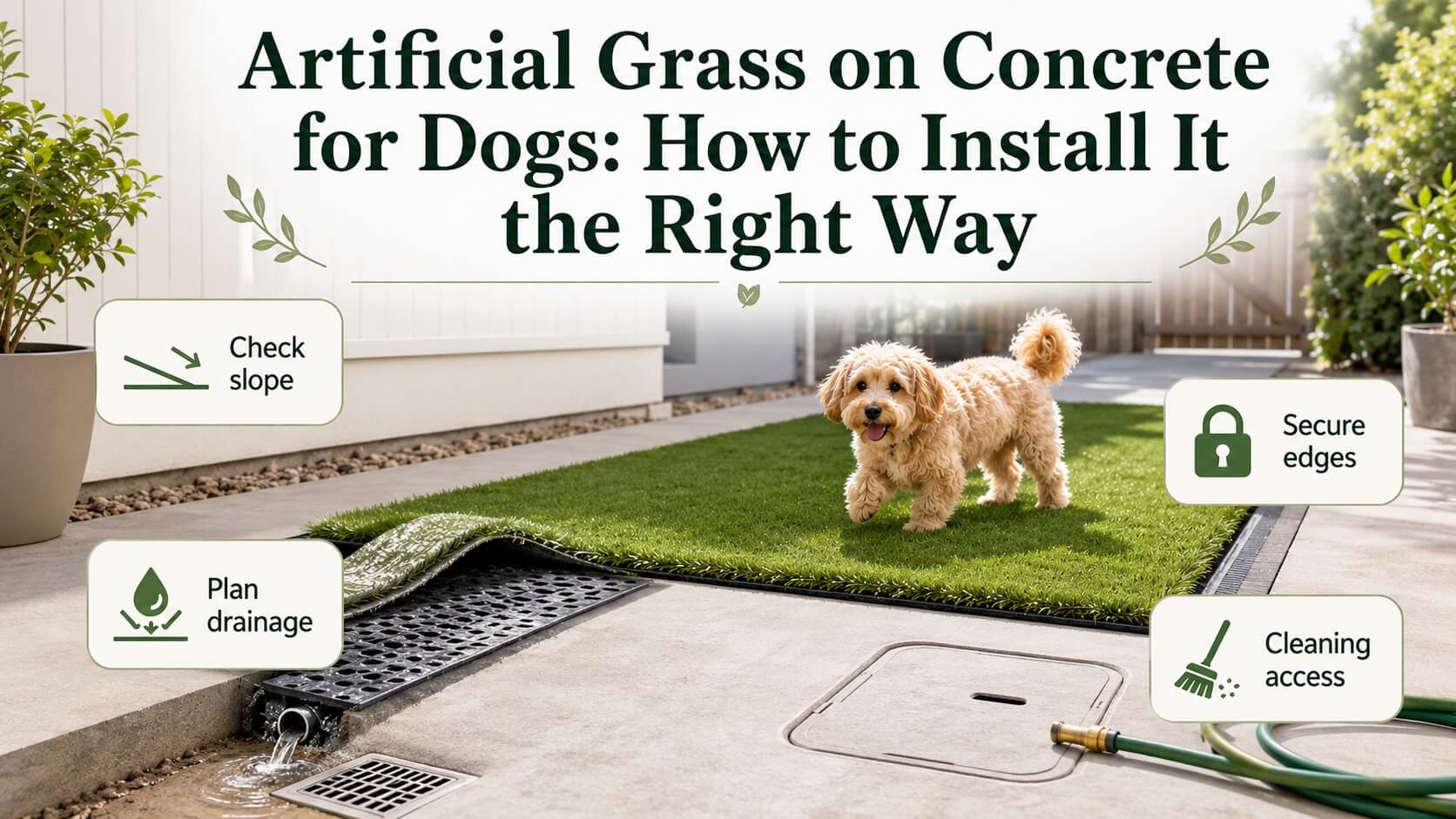
Before installing DIY artificial grass, it’s essential to evaluate the concrete base. Look for a gentle slope (1–2%) so water doesn’t pool, and note any cracks or rough areas that could cause drainage problems or damage the turf.
Experts at Site Prep LLC recommend thoroughly cleaning and leveling the surface to support a successful long-term installation.
Consider using a foam underlay or shock pad beneath your artificial grass to enhance both comfort and drainage, especially if the area will see a lot of foot or paw traffic.
Step 2 – Plan Drainage Before You Lay Turf
Drainage is the single most important technical challenge for artificial grass drainage on concrete. If water can’t flow away, you risk odors, mold, and a soggy surface—especially in pet areas. Poor drainage is the root cause of most odor and mold complaints in artificial turf.
Here’s how to get it right:
- Ensure your concrete has a slight slope so water can run off.
- Install a drainage mat or shock pad beneath the turf, not just for comfort but to let liquids pass through.
- Choose turf with a permeable backing that allows quick drainage.
- Use antimicrobial or zeolite-based infills to further deter odors in pet areas.
For more on what to put under artificial grass for drainage, see this in-depth guide.
Step 3 – Measure and Cut the Turf Area
Measuring and cutting your turf precisely is key to a professional-looking installation.
Measure twice, cut once: starting with an accurate plan reduces waste and ensures a clean fit around doors, gates, and edges.
PetGrows offers custom sizes for many spaces, making it easier to match your layout and minimize seams. Choosing the best artificial grass for dogs is essential—look for products with durable, permeable backing for easier maintenance. Short to medium pile height also makes cleaning up after pets much easier.
Step 4 – Secure the Turf Without Blocking Cleaning Access
A well-secured installation is critical for both durability and hygiene. Edges and corners should be fixed with weather-resistant adhesives or double-sided tape, depending on whether you need a permanent or temporary setup. Temporary setups are especially helpful for renters or those in apartments and balconies.
Be sure to keep access points for cleaning—if the turf is too tightly sealed, it may trap moisture underneath. Real-world examples show that when edges aren’t properly secured, turf can shift or create tripping hazards. For further details on installation techniques, check out the step-by-step installation guide.
Artificial turf adhesives for concrete and proper layout planning make cleaning and maintenance much easier in the long run.
Step 5 – Set a Cleaning Routine for Dog Urine and Odor
Too many pet owners focus on installing turf but overlook the importance of a cleaning routine.
Key takeaway: Regular rinsing, brushing, and the use of zeolite-based infills are essential for controlling odors and maintaining a fresh, hygienic surface.
high drainage rates, frequent rinsing, and the right infill (like zeolite) are foundational for odor control—especially in pet areas. Eco-friendly infills made from cork or coconut fibers are also growing in popularity for their odor-control and sustainability benefits.
For tips specific to balconies, see the balcony dog grass guide.
Real-World Results: What Pet Owners and Pros Have Learned
Real-world examples show how artificial grass for dogs on concrete can help urban pet owners turn hard surfaces into more usable pet areas. A homeowner in Waikanae Beach transformed a dull concrete yard into a lush, low-maintenance play area for their dog by installing turf with a drainage underlay and infill sand, resulting in a comfortable and visually appealing space.
In a large-scale application, Battersea Dogs & Cats Home installed pet turf designed for hygiene and durability, enhancing the environment for dozens of rescue dogs daily.
While specific customer satisfaction numbers are unavailable, these examples show why many pet owners use turf to make urban spaces more comfortable and easier to maintain.
For a deeper dive on pet turf benefits, read What is pet turf and its benefits?
Key Mistakes to Avoid When Installing Artificial Grass on Concrete
It’s tempting to rush the process, but skipping key steps can undermine your investment. The most common mistakes include ignoring drainage needs, choosing the wrong infill, and failing to secure edges and seams.
If drainage isn’t addressed, water and urine can pool—leading to persistent odors and even mold.
Additionally, choosing turf that isn’t UV-stabilized can lead to premature fading in sunny, exposed areas.
For more on drainage and infill best practices, see What to put under artificial grass for drainage?.
Frequently Asked Questions About Artificial Grass for Dogs on Concrete
Q: Can artificial grass be installed directly on concrete? A: Yes, but proper cleaning, leveling, and drainage are essential to prevent problems like pooling water and odor.
Q: What type of artificial grass is best for dogs? A: Choose turf with permeable backing, short to medium pile, and antimicrobial properties for easy cleaning and odor control. For added peace of mind, look for turf certified as lead-free and tested for pet/child safety.
Q: How do you maintain artificial grass used by dogs? A: Regular rinsing, brushing, and the use of pet-safe cleaners and zeolite infill are recommended for hygiene and odor prevention.
For more answers, see our FAQ page.
Share:
How to Stop Dog Pee Odor in Artificial Grass With Better Drainage and Infill
Do You Need Infill for Artificial Grass in Pet Areas?