Artificial grass is a popular choice for pet owners looking to maintain a clean, green yard with less effort than traditional lawns. One of the biggest questions that comes up during installation is whether artificial grass infill for pets is truly necessary. The decision isn’t black and white—what works best depends on your pet area’s size, location, and how your pets use the space. This guide will break down why infill matters, when it’s crucial, and how to select the right solution for your home.
The Short Answer: It Depends on the Pet Area

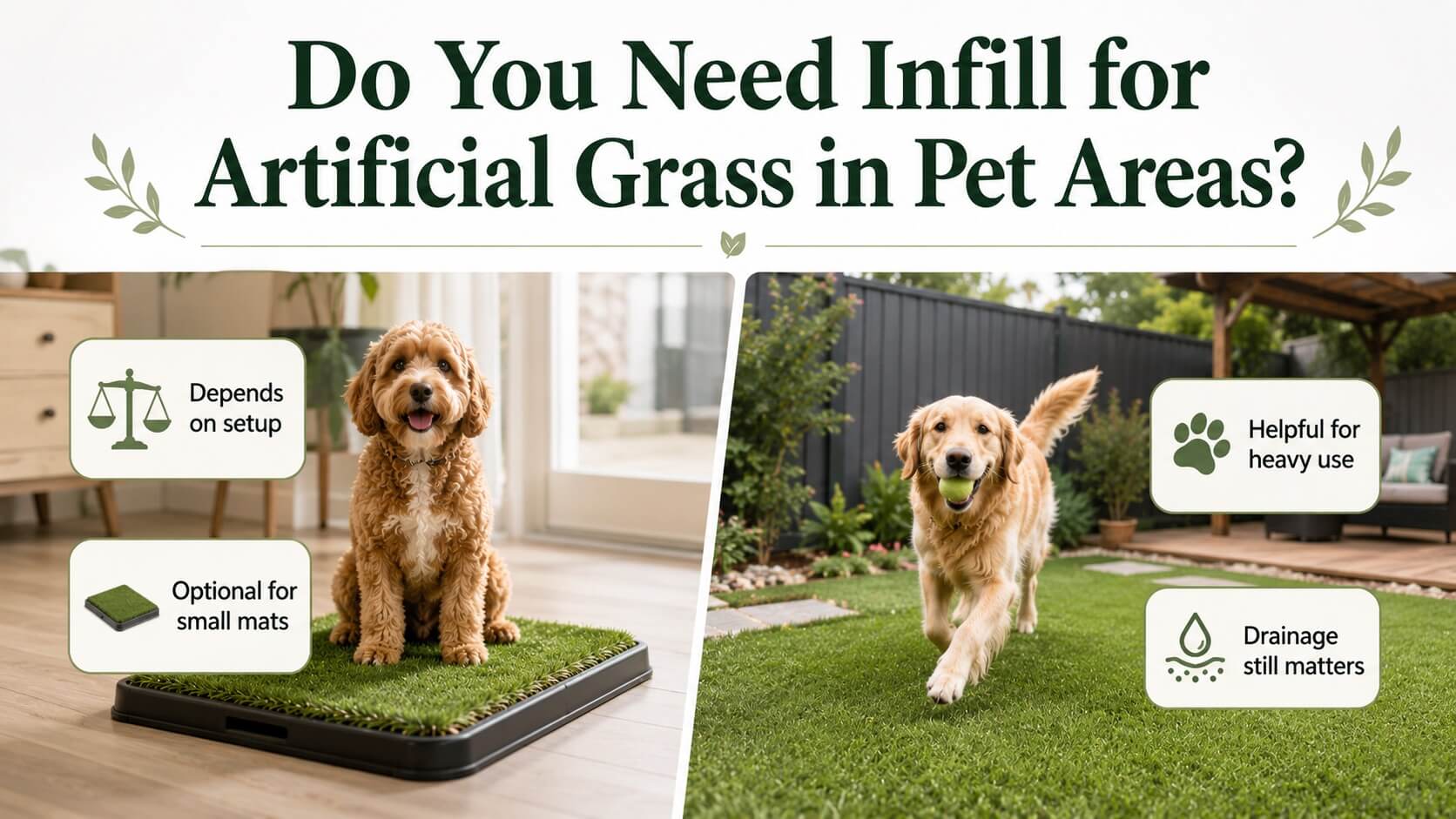
Choosing whether to use infill depends on how your turf will be used. Small movable mats or balcony potty patches sometimes work well without infill, while larger backyard dog runs or permanent play areas typically benefit from it. Infill is key for many pet turf systems because it supports turf blades, stabilizes the surface, and helps with odor management.
Infill isn’t a universal solution—it’s about matching the needs of your turf and your pets’ habits.
If you’re comparing accessories or infill choices, visit the Grass Accessories hub for options that fit your space and needs.
What Infill Does in Artificial Grass
Infill does more than fill empty space—it’s essential for turf performance and longevity. Infill keeps fibers upright, adds ballast so turf stays put, improves drainage performance, cushions paws, and can help control odor. For dog areas, the right infill mix can make cleanup faster, odors lower, and play more comfortable.
Antimicrobial infills go a step further, helping maintain a hygienic surface by reducing bacteria and allergens, which is important for pets’ health. Some infills, like acrylic-coated sand, can also help keep turf cooler, making it more comfortable for pets on hot days.
Why infill is important for pet turf:
- Supports Blades: Prevents matting, keeping turf blades upright and natural-looking.
- Adds Weight & Stability: Keeps the turf in place during active play.
- Odor Control: Zeolite-based infills absorb and neutralize pet urine odors, and antimicrobial options reduce bacteria.
- Cushioning: Creates a softer, more comfortable surface for pets.
- Drainage: Improves water and urine flow, reducing puddles.
When evaluating infill materials, the Grass Accessories collection features several options tailored for pet areas.
When Pet Areas Are More Likely to Need Infill
For pet owners, the importance of infill grows with the level of activity in the area. High-traffic spaces—such as backyard play zones, dog runs, or yards shared by several active dogs—see the greatest benefits from infill. Sand alone may trap odor in pet households, while zeolite-based infills are designed to neutralize ammonia and address odor more directly.
Proper infill selection also supports turf lifespan in busy areas where active breeds or groups of pets play regularly. For further details on the benefits of pet turf, see What is pet turf and its benefits? A Full Explanation.
When Infill May Be Optional
Not every artificial grass setup for pets requires infill. Some specialty products are designed with a dense thatch layer that supports blades without added material. Even so, these surfaces may feel firmer and be more prone to matting, especially under frequent use.
For small, movable mats or short-term indoor setups, infill can sometimes be skipped—but always check manufacturer guidance before deciding. Keep in mind that skipping infill can lead to a less springy surface.
If you’re considering going without infill, make sure the product is intended for infill-free use and that cleaning access is straightforward.
Infill Does Not Replace Drainage and Cleaning
A common misconception is that infill alone will solve all odor and hygiene issues in pet areas. The overall performance of a pet turf installation depends on the infill materials used, along with installation design, drainage preparation, and maintenance practices.
Even the best infill can’t prevent odor if solid waste isn’t removed promptly and the area isn’t rinsed regularly. Inadequate drainage or infrequent cleaning is a leading cause of odor buildup, regardless of infill choice.
Before you select infill, make sure your base provides proper drainage and that you have a realistic cleaning routine. For practical drainage tips, visit What to put under artificial grass for drainage?.
How to Decide Before You Buy
Before purchasing infill or artificial grass for your pet area, consider these steps:
- Location: Is your turf indoors or outdoors, temporary or permanent?
- Pet Size & Frequency: Will large dogs or several pets use the space frequently?
- Odor Concerns: Do you need strong odor control (for example, zeolite infill)?
- Surface Underneath: Are you installing over concrete, soil, or another surface?
- Cleaning Routine: Can you easily rinse and brush the turf?
- Product Guidance: Does your turf supplier recommend infill?
- Warranty/Compatibility: Review product documentation for infill compatibility and warranty details.
For a detailed comparison of infill choices, see How to Choose the Best artificial infill for dogs? A Full Comparison. When you’re ready, explore the Grass Accessories hub for support materials.
Expert Insights and Real-World Proof: Infill in Action
Experts and installers consistently report that the right infill can dramatically improve pet turf performance. Zeolite infill in particular is highly valued for its ammonia-neutralizing properties that tackle dog urine odor. Acrylic-coated infill supports turf durability and keeps blades upright, while antimicrobial options reduce bacteria and keep surfaces cooler.
Pet resorts and dog parks often turn to zeolite and antimicrobial infills for high-use environments, reporting cleaner turf and happier pets. For more product options, browse the Artificial Grass collection when selecting turf for pet areas.
Common Myths, Maintenance Tips, and Environmental Considerations
Not all infills are the same. Silica sand, while affordable, can harden and trap odors, making it less suitable for some pet turf areas. Eco-friendly infills like cork or coconut husk may appeal to owners who want biodegradable options.
Regular maintenance is essential: rinse and brush your turf often, and top up infill as needed to keep blades upright and surfaces odor-free. Brushing also helps distribute infill evenly, which maintains turf appearance and reduces uneven wear.
For more on sustainable turf choices, see our Eco Friendly Artificial Grass Guide: Safe, Non-Toxic & Sustainable Turf.
Frequently Asked Questions About Infill and Pet Turf
Is silica sand infill safe for pets? While inexpensive, silica sand is less suitable for pet turf because it can harden, lose permeability, and trap odors over time.
What’s the best infill for odor control in pet turf? Zeolite-based infills are widely recognized for absorbing and neutralizing pet urine odors.
Are eco-friendly infills effective for pets? Organic infills like cork and coconut husk are biodegradable and considered safe, though they may need more frequent replenishment as they break down faster than mineral-based options.
For more answers, visit our FAQ.
Share:
Artificial Grass on Concrete for Dogs: How to Install It the Right Way
Turf Sand vs Zeolite vs Silica Sand: Which Infill Is Best for Dog Turf?