Controlling pet odor in artificial grass is a top concern for pet owners with synthetic turf. Odor issues are one of the most common frustrations for homeowners with pet-friendly yards. While artificial grass offers a waterless, low-maintenance solution, persistent dog urine smells can turn a fresh lawn into a source of stress.
Artificial grass odor is a real challenge, but it’s manageable with the right approach and products.
As a brand recognized for pet-friendly artificial grass solutions, Pet Grows helps homeowners understand and address the root causes of odor—so your yard can stay inviting and odor-free. If you're looking for a pet-friendly upgrade, explore our artificial grass collection.

Does Artificial Grass Smell Like Dog Pee?
It’s a question nearly every dog owner faces: Does an artificial lawn hold onto urine smells, even when I clean it regularly?
The real answer comes down to chemistry and design. Dog urine contains uric acid and ammonia, which, unlike on natural grass, do not break down naturally in synthetic turf. Instead, these compounds can settle into turf fibers and infill, attracting bacteria that thrive in damp, poorly drained environments—especially in warm weather.
Odor problems intensify in hot and humid climates, making frequent cleaning and airflow improvements especially important for homes in these areas. These odors almost always start below the surface, not in the grass blades themselves.
Odor issues are often made worse by poor drainage, compacted infill, or inconsistent cleaning routines. Infill materials can compact over time, reducing their effectiveness in drainage and odor control. Accessories such as odor-neutralizing infill and proper drainage mats, available in our Grass Accessories Collection, can help prevent such problems from the start.
Start With Drainage: The Foundation for Odor-Free Turf
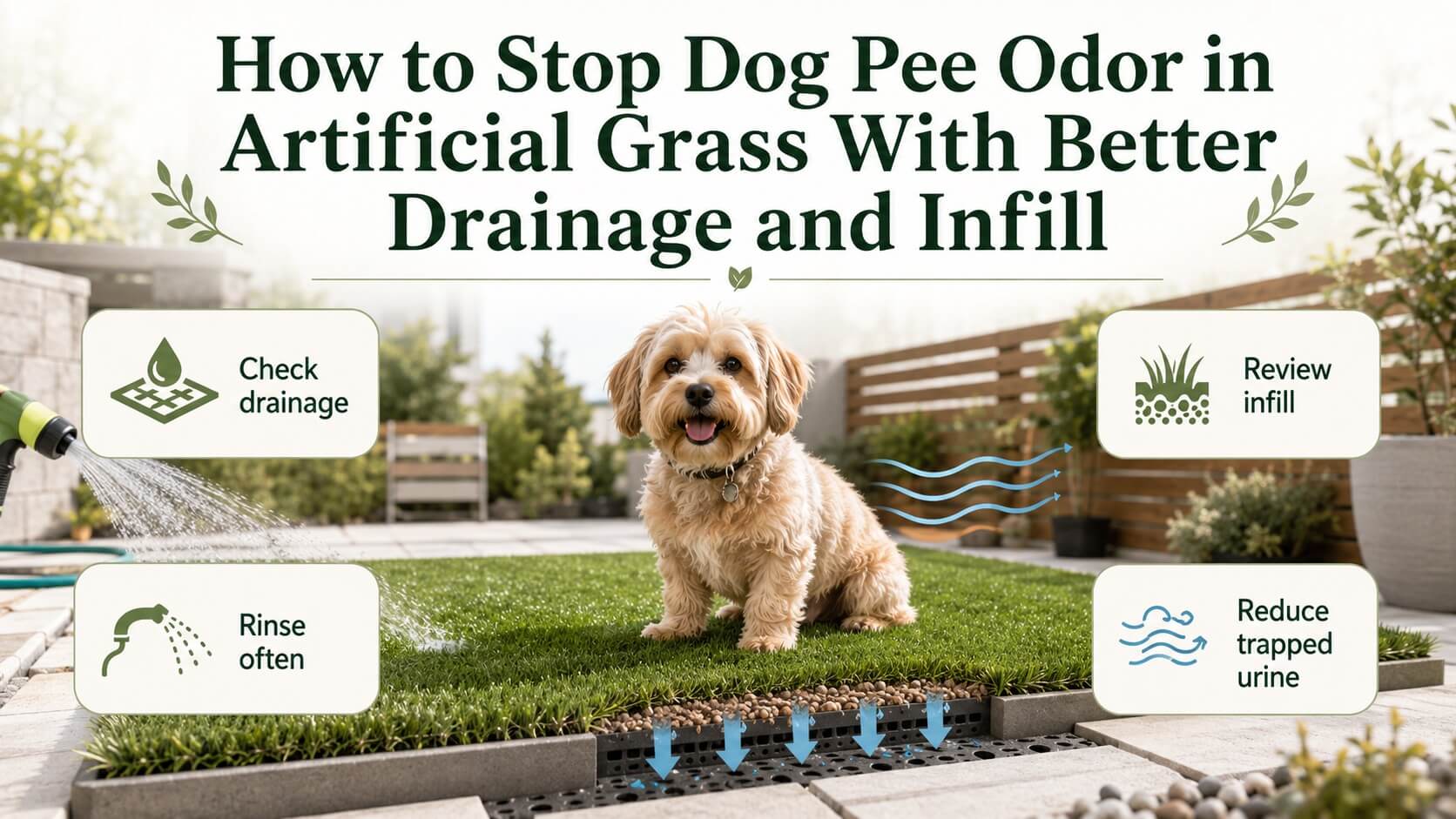
Effective drainage is the first step in solving pet odor problems with artificial grass. The root cause of most turf odor issues is not the turf itself, but what happens underneath.
Here’s how to check and improve drainage for your artificial turf:
- Inspect for Pooling: Look for any areas where water or urine pools after a rinse or rain.
- Examine the Base: The foundation should be made from a permeable material like crushed stone, which allows liquids to move quickly away from the surface.
- Check the Turf Backing: Modern pet-friendly artificial grass uses a high-permeability backing that lets urine flow through, instead of getting trapped.
- Look Underneath: If your turf is installed over concrete or on a balcony, ensure there’s a drainage layer or mat to prevent pooling. Balcony and patio installations are especially prone to drainage issues, as they often lack natural water runoff—adding an elevated mat can help.
- Clear Debris Regularly: Leaves and organic matter can clog drainage holes, leading to odor buildup and supporting bacterial growth.
Drainage is the most important factor in preventing artificial grass odor. A properly installed system should allow liquid to pass through the turf quickly, move moisture into a well-prepared base, and prevent pooling beneath the surface.
For more details on proper base materials and installation, see our guide on what to put under artificial grass for drainage, or browse Grass Accessories for drainage solutions.
How Infill Choices Impact Pet Odor Control
The type of infill you choose for your artificial turf plays a major role in choosing the best infill for artificial grass used by dogs and controlling persistent urine smells. While standard silica sand is sometimes used, pet-focused turf setups often benefit from zeolite or antimicrobial infills.
Here’s why zeolite stands out:
- Ammonia Absorption: Zeolite’s natural porous structure traps and neutralizes ammonia, the main cause of dog urine odor.
- Long-Lasting: Unlike some infills that simply mask the smell, zeolite works at the source and remains effective over time.
- Pet Safe: Zeolite is non-toxic and safe for both pets and children.
- Cooling Benefit: Zeolite also helps regulate turf temperature by absorbing and slowly releasing moisture.
Zeolite infill is highly effective for controlling ammonia buildup at the source. Although direct lab comparisons are scarce, most turf installers and pet experts favor zeolite over silica sand or rubber-based infills for odor control.
Antimicrobial infill products can also extend turf lifespan by helping reduce microbial buildup around the fibers.
To compare all your options, see our full guide to choosing the best artificial infill for dogs. When researching products, look for naturally described features like zeolite infill for pet turf and antimicrobial infill for synthetic turf, especially if odor control is a priority.
Cleaning Routines That Prevent Odor Build-Up
Regular maintenance is essential to prevent odors in pet-friendly turf installations. While artificial grass requires less upkeep than a natural lawn, pet-friendly artificial grass maintenance still means staying proactive.
Consistency is the secret to a fresh-smelling lawn.
Experts recommend removing solid waste daily, rinsing the turf at least once per week, and using a turf-safe, enzyme-based cleaner monthly or as needed—especially in high-traffic pet areas. Enzymatic cleaners break down uric acid crystals and eliminate odors at their source. While some homeowners use diluted vinegar for minor odors, enzyme-based cleaners address the root cause by breaking down uric acid—making them more effective for persistent problems.
Always avoid harsh chemicals, as these can damage the turf fibers and harm pets.
For step-by-step routines and a list of recommended artificial grass cleaning products for pets, see our routine for pet turf cleaning at home.
Troubleshooting: What to Check If Odor Persists
Even with good drainage and proper infill, some pet owners still struggle with persistent odors. A simple troubleshooting checklist can help you identify the cause:
- Surface Cleanliness: Are there visible residues or debris that might be trapping smells?
- Base Layer: Is the base still draining properly, or has it become compacted over time?
- Edges and Seams: Are there corners or seams where liquid might collect and stagnate?
- Infill Condition: Has the infill become compacted or saturated with urine, reducing its effectiveness?
Don’t overlook airflow—poor ventilation in the area can slow drying and promote bacteria buildup.
Address each area systematically before considering a full turf replacement. If you need to upgrade accessories or find odor-control solutions, check our Grass Accessories Collection for support.
When It’s Time to Upgrade: Drainage, Infill, or Turf
Sometimes, persistent odor problems mean it’s time for a bigger change. If deep cleaning and troubleshooting don’t work, or if your artificial turf was installed without pet use in mind, upgrading your drainage system, switching to a new infill, or replacing the turf may be necessary.
For example, many pet owners find relief by switching from an old installation with poor drainage and standard infill to a modern, pet-specific turf system with a permeable base and zeolite infill. Odor issues often originate beneath the surface, not from the turf fibers. Infill choice and drainage design are the main factors influencing odor control.
Infill can often be replenished or partially replaced to restore performance, not just fully swapped out.
Explore our Grass Accessories to find solutions that fit your setup. A well-planned pet-friendly synthetic turf setup and suitable eco-friendly turf infill options can make a lasting difference.
FAQ: Common Questions About Pet Turf Odor Control
Q: Does artificial grass smell worse on balconies or patios? A: Yes, limited drainage and reduced airflow on balconies can make odor issues more noticeable. Consider elevated installations or additional drainage mats for these setups. Ensuring good airflow, such as by using fans or opening windows, can also help minimize odors.
Q: How often should I clean my artificial grass to prevent odor? A: Remove solids daily, rinse at least once a week, and apply an enzyme cleaner monthly or as needed. Frequency may increase with heavy pet use.
Q: Can I use DIY solutions for odor control? A: Some homeowners use diluted vinegar for mild odors, but enzyme-based cleaners are more effective on uric acid and ammonia.
Q: What’s the best way to prevent odor from developing at all? A: Invest in pet-friendly turf with a permeable base and zeolite infill, and develop a regular cleaning routine.
For more answers on DIY artificial grass odor solutions and artificial turf odor-neutralizing techniques, visit our balcony dog grass guide.
Share:
Best Artificial Grass for Puppies: What New Dog Owners Should Know
Artificial Grass on Concrete for Dogs: How to Install It the Right Way