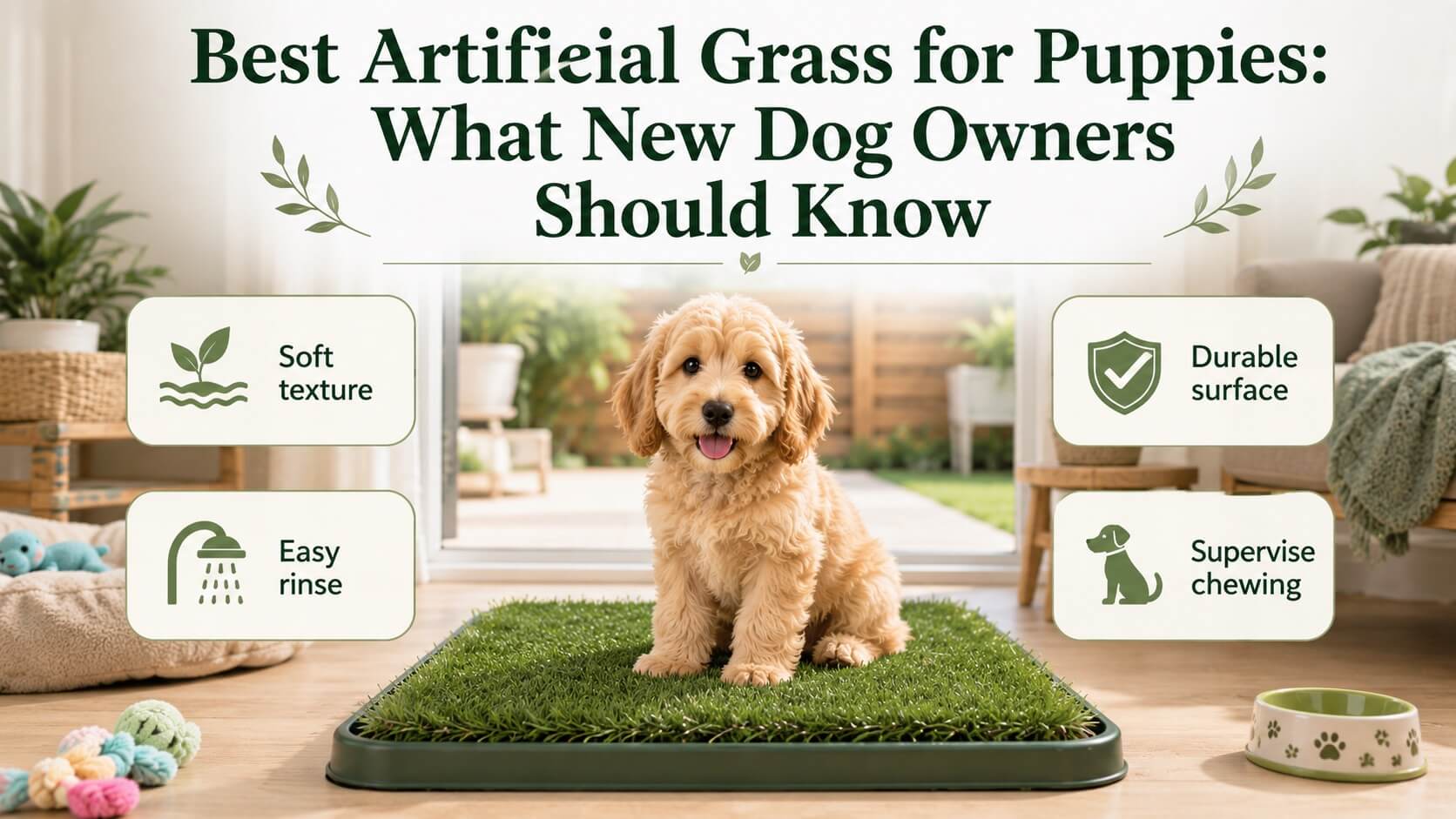
More new dog owners are looking for the best artificial grass for puppies because they want pet-friendly, low-maintenance spaces that are safe, hygienic, and easy to clean.
Puppies have unique needs that make pet-specific artificial grass a smart upgrade for today’s dog-loving families.
Choosing the right dog-friendly artificial turf helps new owners create comfortable spaces that support training, play, and long-term health for their pets. For a full range of pet-safe, custom-sized options, explore pet-friendly artificial grass options.
Why Puppies Need a Different Artificial Grass Setup
Puppies are naturally curious, playful, and prone to accidents. Unlike adult dogs, they may chew, dig, and explore with their mouths—behaviors that require extra consideration when selecting artificial grass. Their softer paws and developing routines mean comfort, safety, and resilience are top priorities.
Because puppies have higher accident rates, repeated soiling can quickly overwhelm weak drainage or older turf types, making pet-specific products a smart choice for new dog owners.

Puppies benefit most from artificial grass that is designed for frequent use, easy cleaning, and durability against rough play and accidents.
Pet-friendly turf, especially when offered in custom sizes, allows new owners to create dedicated spaces for training and play. This reassurance is key for buyers navigating the challenges of puppyhood and home improvement at the same time.
What to Look for in Artificial Grass for Puppies (Drainage, Texture, Durability, Cleaning)
Selecting pet-specific artificial grass means focusing on features that support hygiene and daily use. Drainage is critical—turf with enhanced drainage systems prevents urine pooling, reduces odor buildup, and keeps surfaces drier for longer. Efficient drainage is one of the most important features for pet-friendly turf, directly impacting odor control and hygiene.
Antimicrobial properties are another modern innovation, helping to inhibit bacteria growth from pet waste and further control odors.
Here’s how the right artificial grass stands out:
- Efficient Drainage: Prevents odors and unsanitary conditions by allowing urine and water to pass through quickly.
- Soft, Durable Texture: Gentle on puppy paws but tough enough to withstand chewing and digging.
- Antimicrobial Protection: Minimizes bacterial growth for a cleaner, fresher surface.
- Easy Cleaning: Surfaces that rinse easily and resist staining make maintenance manageable.
Some modern turf options even integrate cooling technologies or antimicrobial infills for extra hygiene and comfort in high-traffic puppy spaces.
Choosing artificial grass with strong drainage and an easy-to-clean surface gives puppy owners a practical, hygienic solution that supports healthy development and a cleaner home.
For more on drainage and durability, see our full range of artificial grass for dogs.
Puppy Potty Training and Turf Placement
Creating a consistent potty routine is essential for housebreaking. Start by selecting a single, accessible location for your puppy’s artificial grass potty zone—whether it’s a corner of the yard, balcony, or patio. Place the turf where your puppy can reach it quickly, especially during the early training phase.
How to set up your puppy’s potty area:
- Pick a Consistent Spot: Choose a location your puppy can always access.
- Keep the Area Clean: Remove waste promptly and rinse regularly.
- Reinforce Routine: Lead your puppy to the turf after meals, naps, and play.
- Monitor and Adjust: If your puppy struggles, adjust the setup for easier access or comfort.
- Upgrade as Needed: As your puppy grows, expand or relocate the area to suit their needs.
Case studies show that puppies in homes with a single, consistent artificial grass potty zone achieve reliable potty training routines faster than those with multiple or shifting locations.
Choosing the right turf for your puppy’s needs is crucial—see our guide to selecting the ideal artificial grass for your dog.
Cleaning and Odor Control for Puppy Accidents
It’s a question nearly every new dog owner faces: how do you keep puppy potty areas clean and odor-free?
The answer is grounded in regular maintenance. Solid waste should be removed as soon as possible, and the area rinsed thoroughly with water. Industry best practices recommend prompt waste removal, weekly rinsing, and periodic deep cleaning with a turf-safe cleaner to maintain hygiene and minimize odors.
For urine, enhanced drainage in the turf helps prevent lingering smells, but periodic deep cleaning with a turf-safe cleaner is still necessary.
Turf with high drainage rates and antimicrobial treatments is especially useful for households managing multiple pets or repeated accidents.
For detailed odor control tips for artificial grass, see How to Stop Dog Pee Odor in Artificial Grass With Better Drainage and Infill.
Safety and Supervision Basics (Chewing, Edges, Loose Materials)
Ensuring safety with artificial grass comes down to the materials and your supervision. Puppies may chew on turf fibers or dig at the edges, so select turf made from non-toxic, lead-free materials and install it securely to prevent loose edges or exposed seams. Veterinary guidance stresses that while artificial turf is generally safe, it can heat up quickly in direct sunlight, so always check the surface temperature before play and provide shade when possible.
Key takeaway: Pet-safe artificial grass is designed to minimize risks for curious puppies, but supervision—especially in the early weeks—is essential for their health and safety.
If your puppy is a persistent chewer or known to eat non-food items, monitor closely and consult your vet if you notice fiber consumption or upset stomach symptoms.
For more on the benefits of artificial grass for dogs, read 7 Reasons Why Artificial Grass Is Good for Dogs.
How to Choose the Best Setup for Your Puppy (Home Type, Puppy Stage, Routine)
The ideal artificial grass setup depends on your home and your puppy’s age. Compare your options:
| Apartment/Balcony | Patio/Small Yard | Large Yard | |
|---|---|---|---|
| Space Needed | Small patch or potty tray | Medium area for play/training | Large, flexible area |
| Access | Easy indoor/outdoor access | Direct from house/back door | Full yard access |
| Cleaning | Rinse in sink or with hose | Hose or spot clean | Hose, occasional deep clean |
Custom-sized turf helps adapt to any living situation, whether you’re in a high-rise or have a sprawling backyard.
Product variety and custom sizing are vital—buyers can easily scale up or change their turf as their puppy transitions from a small balcony patch to a larger yard for play.
See why artificial grass is a smart choice for pet owners in our full guide.
Definitions, Regulations, and Best Practices for Puppy Turf
Understanding industry terms and standards helps you choose safe, compliant turf.
- Lead-Free: Modern artificial grass should test below the CPSC’s 100 ppm lead limit for children’s products.
- Material Safety: Choose turf that is free from harmful chemicals such as phthalates or PFAS.
- Maintenance Best Practices: Clean turf regularly and inspect for signs of wear, especially in high-use areas.
Best practices also include checking for local or state-specific guidelines, as some areas are beginning to regulate turf materials and PFAS disclosures.
For more information on pet turf safety standards and FAQs, visit our FAQ page.
Environmental Impact and Puppy-Specific Hazards
Artificial turf brings convenience, but it also raises environmental and puppy-specific concerns.
On the environmental side, artificial turf can shed microplastics over time and is not biodegradable, making disposal a challenge. Microplastic shedding from synthetic turf can contribute to broader pollution, especially if not properly maintained or disposed of.
For puppies, the main hazards include possible chewing and ingestion of fibers, or rare allergic reactions to certain materials. Modern turf products may include cooling or antimicrobial technologies to address some of these issues, but conscious disposal and careful supervision remain important.
Opting for non-toxic, recyclable turf options and avoiding crumb rubber infill can reduce your household’s environmental impact while protecting pets from potential chemical exposures.
For more on eco-friendly artificial grass options, see our Eco Friendly Artificial Grass Guide.
Share:
Best Grass Alternatives for Dogs: What to Use Instead of a Traditional Lawn
How to Stop Dog Pee Odor in Artificial Grass With Better Drainage and Infill