
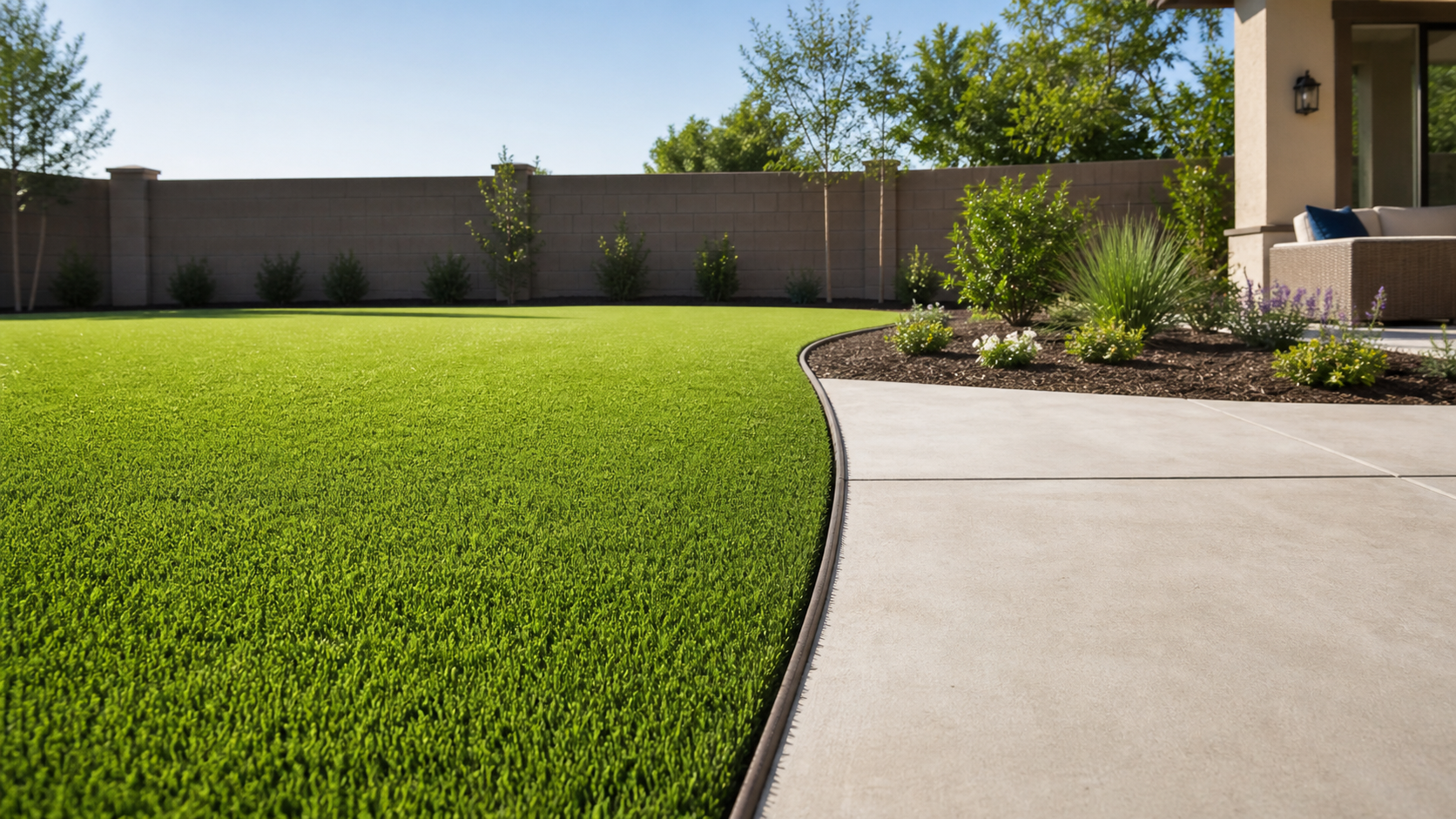
A lawn can be healthy and still look unfinished if the edge is ragged. That thin line between turf and everything else, including mulch, gravel, paving, soil, or a flower bed, does more visual work than most people expect.
Good turf edging gives the lawn a clear stopping point. It keeps grass from creeping into beds, helps artificial turf stay tight at the perimeter, and makes mowing or trimming less annoying. The right edge also changes the feel of a yard. A straight metal line feels modern. Brick feels traditional. Stone feels more natural. A simple spade-cut trench can look surprisingly sharp when it is maintained.
This guide covers practical turf edging ideas for natural grass and artificial grass, including low-cost options, decorative borders, and edging that works especially well for synthetic turf.
Start with the shape of the lawn
Before choosing a material, look at the shape you want.
Straight edging works well next to driveways, patios, putting greens, and modern walkways. It gives the yard a crisp, intentional look. Curved edging is better around trees, planting beds, pet areas, and softer garden layouts. Curves are easier to get wrong, though. A curve should look smooth from several steps back, not wavy section by section.
You also need to decide whether the edging should show. Hidden edging does its job quietly. Metal strips, bender board, and plastic edging can sit low enough that the lawn line is the main thing you see. Decorative edging is different. Brick, pavers, stone, timber, and concrete become part of the design.
Neither approach is automatically better. The right choice depends on the yard, the amount of maintenance you want, and whether the edge needs to hold natural soil or a synthetic turf base.
Hidden edging for sharp lawn lines
Hidden or low-profile edging is useful when you want the turf itself to be the focus.
Steel and aluminum edging
Steel and aluminum edging make some of the cleanest lines. They work especially well with straight runs, geometric beds, and modern artificial lawns. They can also bend around gentle curves if you buy flexible edging and stake it properly.
Metal costs more than plastic, but it usually looks better over time. It does not rot like timber and it does not wave as easily as cheap plastic edging. Keep the top close to grade so it defines the line without becoming a trip edge.
Use metal edging when you want a clean border between turf and gravel, turf and mulch, or turf and a hardscape feature. For synthetic turf, metal can also help hold the compacted base near the perimeter.
Bender board and recycled plastic edging
Bender board is a common choice for curved artificial turf edges. It is flexible, easy to cut, and simple to stake. It works around trees, planting beds, dog runs, and small backyard lawns where a rigid edge would be awkward.
The main mistake is leaving too much plastic visible. Bender board should hold the shape, not call attention to itself. Set it low, stake it often, and check the curve from a distance before locking everything in.
For artificial turf, install the board before laying the turf. Bring the base material right up to the board, compact it, and then secure the turf edge tightly.
Concrete mow strips
A concrete mow strip is a narrow concrete border between turf and another surface. It is not subtle, but it is practical. If the strip is wide and flat enough, mower wheels can ride on it. That cuts down on trimming along beds and paths.
Concrete works for natural grass and artificial grass. It is stable, long lasting, and useful around patios, pool decks, and high-traffic areas. It costs more than plastic or trench edging, and many homeowners hire a pro for poured concrete. Once it is in, though, there is very little to adjust.
Decorative turf edging that becomes part of the yard
Some borders are meant to be seen. They add texture, color, and weight to the lawn line.
Brick and paver edging
Brick is one of the safest choices for a traditional yard. It looks good beside patios, garden paths, driveways, and older homes. Bricks can be laid flat for a mowing strip or set upright for more height.
The base matters. A brick edge placed directly on soil will usually shift, sink, or tilt. Use a compacted gravel and sand base so the bricks stay even. If you want the edge to feel connected to the house, choose a brick color that picks up tones from the walkway, patio, or exterior trim.
Pavers work the same way, but they usually read a little cleaner and more modern than reclaimed brick.
Natural stone edging
Stone is less precise than metal or brick, and that is the point. It fits cottage gardens, wooded yards, dry creek beds, and planting areas with a looser shape.
Cut stone blocks give a more formal line. Fieldstone and irregular stones feel more relaxed. Dry-stacked stone looks natural but can move over time. Mortared stone is stronger, but it takes more labor and is harder to change later.
Stone edging is rarely the cheapest option. Use it where it will be seen up close, such as the front walk, a seating area, or the main garden bed.
Timber and sleeper borders
Timber edging gives a yard a warmer, more rustic feel. It works around raised beds, vegetable gardens, cabins, and informal planting areas.
The drawback is moisture. Wood can rot, twist, and split, especially where the soil stays wet. If you use timber, choose treated or rot-resistant wood, keep drainage in mind, and avoid burying more wood than needed.
Timber can look heavy next to a small artificial lawn, so it is usually better for larger beds or natural-style gardens.
Low-cost turf edging that still looks clean
You do not need an expensive border everywhere. In many yards, the best upgrade is simply making the existing line cleaner.
Spade-cut trench edging
A spade-cut edge is cheap, clean, and underrated. Use a half-moon edger or sharp spade to cut a shallow V-shaped trench between the lawn and the bed. The small shadow line makes the lawn look neat without adding another material.
The tradeoff is maintenance. Grass slowly grows back into the trench, and mulch can slump into it. Expect to refresh the line a few times during the growing season.
This is a good option for natural lawns, front beds, and homeowners who do not mind a little seasonal work.
Plastic edging installed carefully
Plastic edging can look fine when it is installed with patience. It looks bad when it sticks out of the ground, waves along the line, or pops up after soil movement.
Use more stakes than you think you need. Keep the top low. For curves, lay out the line with a garden hose first, then step back and adjust it before digging. Plastic is best for small beds and budget projects, not places where you need a permanent, high-end edge.
Spend where people notice
If the budget is tight, edge one visible area well instead of using a weak material everywhere. The front walkway, driveway edge, patio border, or main garden bed will give you the biggest visual return. Less visible side yards can wait.
Turf edging ideas for artificial grass
Artificial grass needs a stronger edge than natural turf. Natural grass roots into soil. Synthetic turf does not. The perimeter has to hold the base, keep the turf from lifting, and stop infill from spilling out.

Bender board for curved artificial lawns
Bender board is one of the easiest ways to shape a curved synthetic lawn. Install it along the planned edge, stake it firmly, and build the compacted base up to the board. After the turf is rolled out and trimmed, secure the turf to the edge so it stays tight.
This setup works well around dog turf areas, trees, planting beds, and curved patios.
Metal edging for modern synthetic turf
Metal edging is better when the design has straight lines or tight geometry. It gives artificial turf a sharper border and helps keep the base from spreading.
Use it around putting greens, narrow side yards, modern patios, and turf-and-paver layouts. If you are installing pet turf, pair the edging with the right accessories from the Grass Accessories collection, such as turf staples, artificial lawn tape, and silica sand infill.
Concrete and paver borders for patios and pool decks
Hard borders are often the cleanest finish for synthetic grass. Concrete, pavers, and patio slabs give the turf a fixed edge to meet. The turf can be cut right up to the hard surface, which helps the lawn look built into the space instead of laid on top of it.
This works especially well beside patios, balconies, pool decks, dog runs, and outdoor play areas.
What to check before finishing artificial turf edges
The edge is where many artificial grass installs start to fail. Check these details before calling the job done:
- Bring the compacted base all the way to the edging.
- Trim the turf with a sharp blade so the cut is clean.
- Secure the perimeter with nails, staples, adhesive, or the system your turf calls for.
- Keep infill inside the turf area, especially along slopes and high-traffic edges.
- Brush the edge after adding infill so the fibers stand up instead of folding over.
For a deeper look at infill choices, Pet Grows also has a guide to turf sand, zeolite, and silica sand for dog turf.
How to choose the right turf edging
The best edging is the one that fits the yard and the amount of work you want to do later.
Match the material to the style
Use steel, aluminum, or concrete for a modern lawn. Use brick or pavers for a classic home. Use stone for a garden that already has natural textures. Use timber when the yard has raised beds, rustic planting, or a softer feel.
For artificial grass, start with function first. The edge has to hold the turf system. Looks matter, but a clean border will not help much if the turf lifts after a few months.
Think about water and soil movement
Wet soil is hard on timber. Freeze and thaw cycles can move lightweight edging. Loose gravel and mulch need edging that holds material in place. If water collects along the edge, fix the drainage before installing the border.
Better Homes & Gardens notes that edging can help separate lawns, beds, paths, and patios, but the material should suit the job and the way the area is maintained.
Choose edging that works with your mower
Flat pavers, bricks, and concrete strips can work as mowing edges. Raised stone or timber borders may require more trimming. If you hate string trimming, pick a flat edge wherever possible.
Do not use the same material everywhere by default
Mixed edging can look good when it is intentional. For example, you might use brick along the front walk, metal around a modern patio, and a spade-cut trench around a back garden bed. The trick is to repeat materials where they make sense, not scatter five different borders into one small yard.
Basic installation overview
Most turf edging projects follow the same rhythm, even when the materials change.
1. Lay out the line
Use string for straight runs and a garden hose for curves. Look at the line from the house, the street, and the patio before digging.
2. Cut or clear the edge
Remove grass, roots, and loose soil where the edging will sit. For plastic or metal, dig a narrow trench. For brick, pavers, or stone, dig deep enough for the base material too.
3. Build the base
Brick, paver, and stone edging usually need compacted gravel and sand. Artificial turf needs a stable base that reaches the perimeter. Lowe's artificial turf installation guide also recommends preparing the subbase, compacting aggregate, securing seams and edges, and brushing infill into the fibers.
4. Install and secure the edging
Stake plastic, bender board, and metal often enough to prevent waves. Set brick and pavers at a consistent height. Tap stone into place and check the line as you go.
5. Backfill and finish
Backfill soil, mulch, or base material against the edging. For artificial turf, trim the turf, fasten the edge, add infill, and brush the fibers upright.
Common turf edging mistakes
Wavy lines are the most common problem. Use a guide instead of eyeballing the edge.
Uneven height is another one. A border that rises and dips will look crooked even if the material is expensive.
Weak staking causes plastic, bender board, and metal edging to move. Poor base prep causes brick and stone to sink. Both problems are avoidable if you slow down during installation.
Drainage also matters. Do not build an edge that traps water against turf, wood, or the house. In artificial grass areas, water needs a path through the base and away from the edge.
Finally, remember that edging is not maintenance-free. Natural grass still creeps. Mulch still settles. Artificial turf edges still need brushing and occasional cleaning, especially in pet areas.
Final thoughts
Turf edging is a small detail, but it changes how the whole lawn reads. Metal makes the line sharp. Brick and pavers make it feel established. Stone softens the edge. Concrete makes mowing easier. Bender board and staples help artificial turf stay where it belongs.
If you are not sure where to start, choose the most visible edge first. Clean up the front walk, the driveway, or the main patio border. Once that line looks right, the rest of the yard is easier to plan.
Share:
Grass Pee Pad for Dogs: Best Uses for Balconies, Patios, and Apartments
Artificial grass edging: how to keep turf edges clean and secure