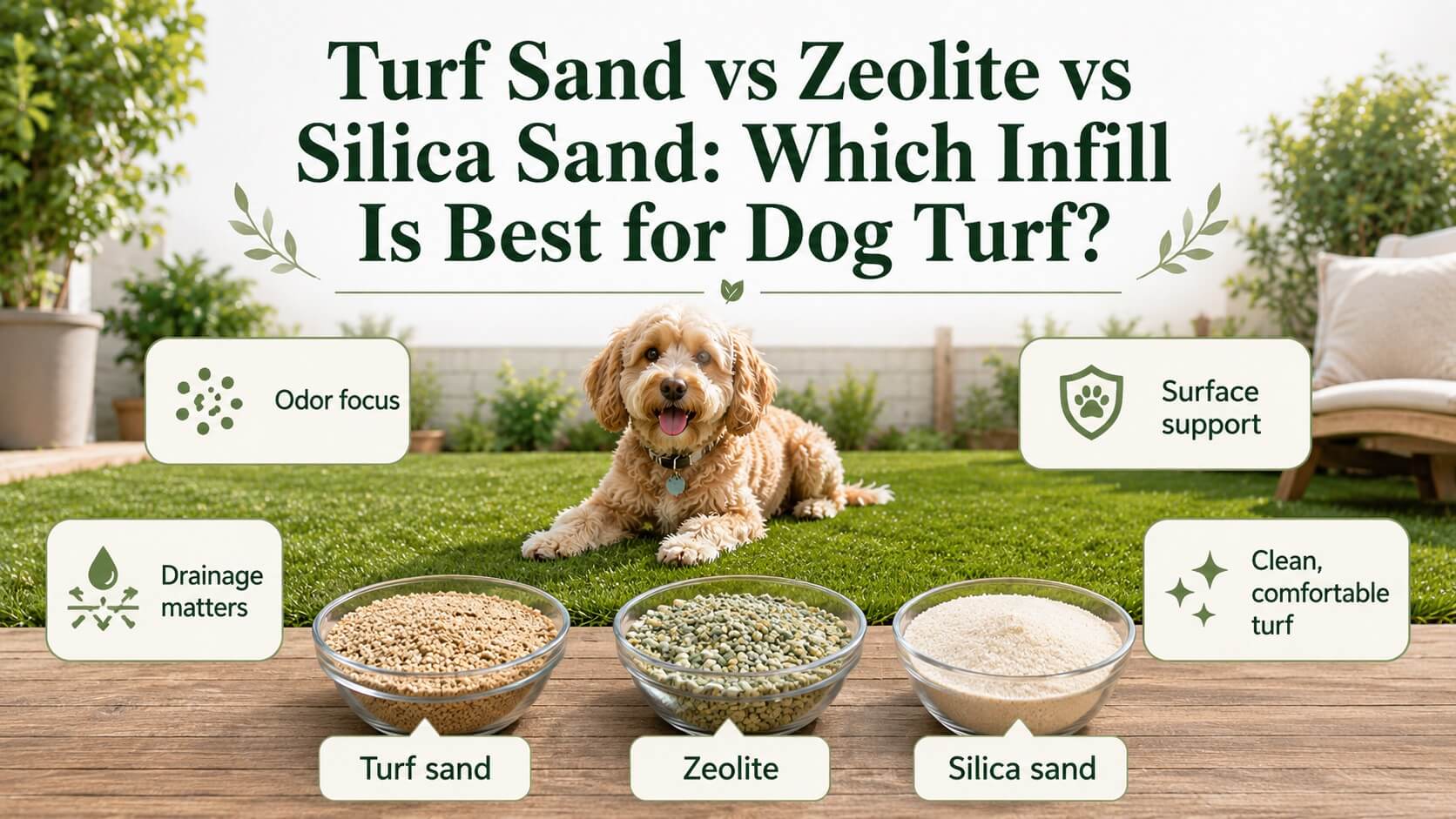
Choosing the right infill for your dog’s artificial grass area is important for maintaining a clean, odor-free, and comfortable environment. The infill you select supports turf fibers, adds cushioning, aids drainage, and can play a major role in controlling odors. Support items for artificial grass, such as those found in the Grass Accessories collection, can also improve your turf system’s performance and longevity.

Why Infill Choice Is Critical for Dog Turf Areas
Infill is more than just filler; it’s essential for maintaining a safe and healthy play space for your pet. Improper infill selection, combined with design and maintenance issues, is a significant factor behind common pet turf problems such as odor, bacteria buildup, or poor drainage.
In addition, some infills can trap heat, leading to discomfort for pets during warmer months.
Selecting the right infill can prevent the most frustrating issues pet owners face with artificial turf.
Infill that provides effective odor control, proper drainage, and paw comfort is crucial for a truly dog-friendly turf. Accessories that help your turf system perform better are readily available and can make maintenance simpler.
Turf Sand: Strengths and Watch-Outs for Pet Owners
Turf sand, often called silica sand, is one of the most common and affordable infills for artificial grass. It supports turf fibers and offers stability, but pet owners should be aware of its limits—especially when dogs are involved.
Here’s how silica sand infill stands out:
- Affordability and accessibility: Silica sand is widely available and cost-effective.
- Surface stability: Helps keep turf blades upright and adds weight to prevent shifting.
- No odor control: Silica sand does not absorb or neutralize pet urine, which can result in odor buildup—especially if not cleaned regularly.
- Heat retention: Sand can trap heat and make the turf surface uncomfortably hot for pets, particularly in direct sun. While dark rubber infill can reach 140–160°F, light or coated sands generally range from 100–130°F; zeolite is believed to be cooler due to its moisture retention.
And although silica sand aids in drainage, it does little to manage odors caused by pet waste.
Silica sand lacks odor control and can retain heat, making the turf surface hotter on warm days.
Zeolite-Style Infill: What Pet Owners Usually Want From It
Why do dog owners consider zeolite infill for pet turf?
Many pet owners turn to zeolite for its standout ability to absorb and neutralize ammonia from pet urine, effectively reducing odors. Zeolite’s porous structure also retains moisture, providing a cooling effect on hot days.
Zeolite is also hypoallergenic and naturally occurring, making it an environmentally friendly option for pet owners.
Unlike sand, it does not trap moisture or allow bacteria to thrive as easily. Zeolite is not currently offered by PetGrows; always check your supplier’s product lineup before purchasing. Zeolite infill may require periodic replenishment, as its absorption capacity diminishes over time.
For a thorough look at comparing infill types, see How to Choose the Best artificial infill for dogs? A Full Comparison.
Silica Sand: Where It Fits and Where It May Not
Silica sand is a practical, low-cost option for general turf use—but for pet owners, it’s not always the best fit. While considered safe for pets, it does not control odors and can contribute to bacterial growth if not maintained.
This means frequent cleaning is often required in pet potty areas.
Silica sand is inert and poses minimal environmental risk, but its lack of odor control may increase water use for cleaning. Industry best practices recommend using washed, dust-free silica sand to minimize any health risks for pets and humans.
For pet owners prioritizing hygiene and odor management, alternatives or blended systems may be preferable.
Comparing Infill Choices for Dog Potty Areas
Here’s how the main infill options stack up for dog potty zones:
| Feature | Silica Sand | Zeolite | Hybrid (Zeolite + Coated Sand) |
|---|---|---|---|
| Odor Control | Poor | Excellent | Excellent |
| Heat Retention | High | Lower (with moisture) | Lower |
| Maintenance | Frequent cleaning | Occasional replenishing | Moderate |
| Drainage | Good | Good | Good |
| Comfort | Firm | Softer on paws | Balanced |
Silica sand requires regular cleaning to prevent odor and bacteria.
Zeolite offers superior odor control but needs replenishing over time.
Blending zeolite with coated silica sand can balance odor control and structural support, potentially reducing maintenance.
If you live in a humid or rainy region, drainage and infill stability are especially important for turf longevity.
For more on drainage solutions, see What to put under artificial grass for drainage?.
Which Infill Is Best for Dog Turf? (Summary & Practical Guidance)
There’s no one-size-fits-all answer: the best infill depends on your dog’s habits, your climate, and your willingness to maintain the turf. Zeolite infill excels at odor control and cooling but needs to be replaced over time; silica sand is affordable, but less effective for odor and heat management. Hybrid systems can offer the best mix of support and odor control.
Installers often recommend hybrid infill blends for multi-dog homes and high-traffic zones to maximize odor control and maintain durable turf.
No infill replaces regular cleaning and maintenance in pet turf areas.
For more on the broader benefits of pet turf, see What is pet turf and its benefits? A Full Explanation.
Frequently Asked Questions About Infill and Pet Turf
Q: Does artificial turf need special cleaning with pets? A: Yes. Regular rinsing, spot cleaning after pet use, and occasional enzyme-based treatments are recommended for all infill types to keep your lawn fresh and hygienic.
Be sure to follow the specific maintenance instructions from your turf manufacturer for best results.
Q: What’s the most eco-friendly turf infill for pets? A: Zeolite and hybrid systems with coated, non-toxic sand are often discussed as eco-friendly turf infill options.
Q: Are there infills that help with artificial grass cooling for pets? A: Infill types like zeolite can help keep the turf surface cooler through evaporation, especially in sunny climates.
For more pet turf questions, visit our FAQ page.
Share:
Do You Need Infill for Artificial Grass in Pet Areas?
What Is Turf Infill? A Simple Guide for Pet Owners