Living with a dog in the city is rewarding, but potty routines are not always simple.
If you live in an apartment, you may not have quick access to a yard. If you have a balcony or patio, you may be wondering whether it is clean, safe, and neighbor-friendly to create a small potty area there. For puppies, senior dogs, small breeds, bad weather days, or late-night emergencies, having a reliable grass potty setup at home can make daily life much easier.
The key is not just buying a grass pad. A good setup depends on the right surface, smart placement, proper drainage, and a cleaning routine you can actually keep up with.
Why Dog Owners Use Grass Potty Areas
A grass potty area gives dogs a familiar surface that feels closer to a yard than a disposable pee pad. This can be especially helpful for dogs that are already used to going outside, or for puppies learning where they should go.
Most setups fall into three categories:
Real grass pads, which feel natural but need regular replacement.
Disposable pee pads, which are convenient but create ongoing waste.
Artificial grass pads, which are reusable, easy to size, and better suited for long-term apartment, balcony, or patio setups.
For many city homes, artificial grass is practical because it can be cut to fit small spaces, rinsed regularly, and paired with a tray or drainage layer. If you are comparing surface options, PetGrow’s artificial grass collection is a useful place to understand different pile heights and styles.
Apartment Setups: Keep It Simple and Easy to Clean
For apartment dog owners, odor is usually the biggest concern. A grass potty area can work indoors, but only if it is easy to clean.
Choose a spot with good airflow and convenient access, such as near a balcony door, laundry area, bathroom, or utility corner. Avoid placing the potty area in narrow walkways or close to food and water bowls.
A good apartment setup should include:
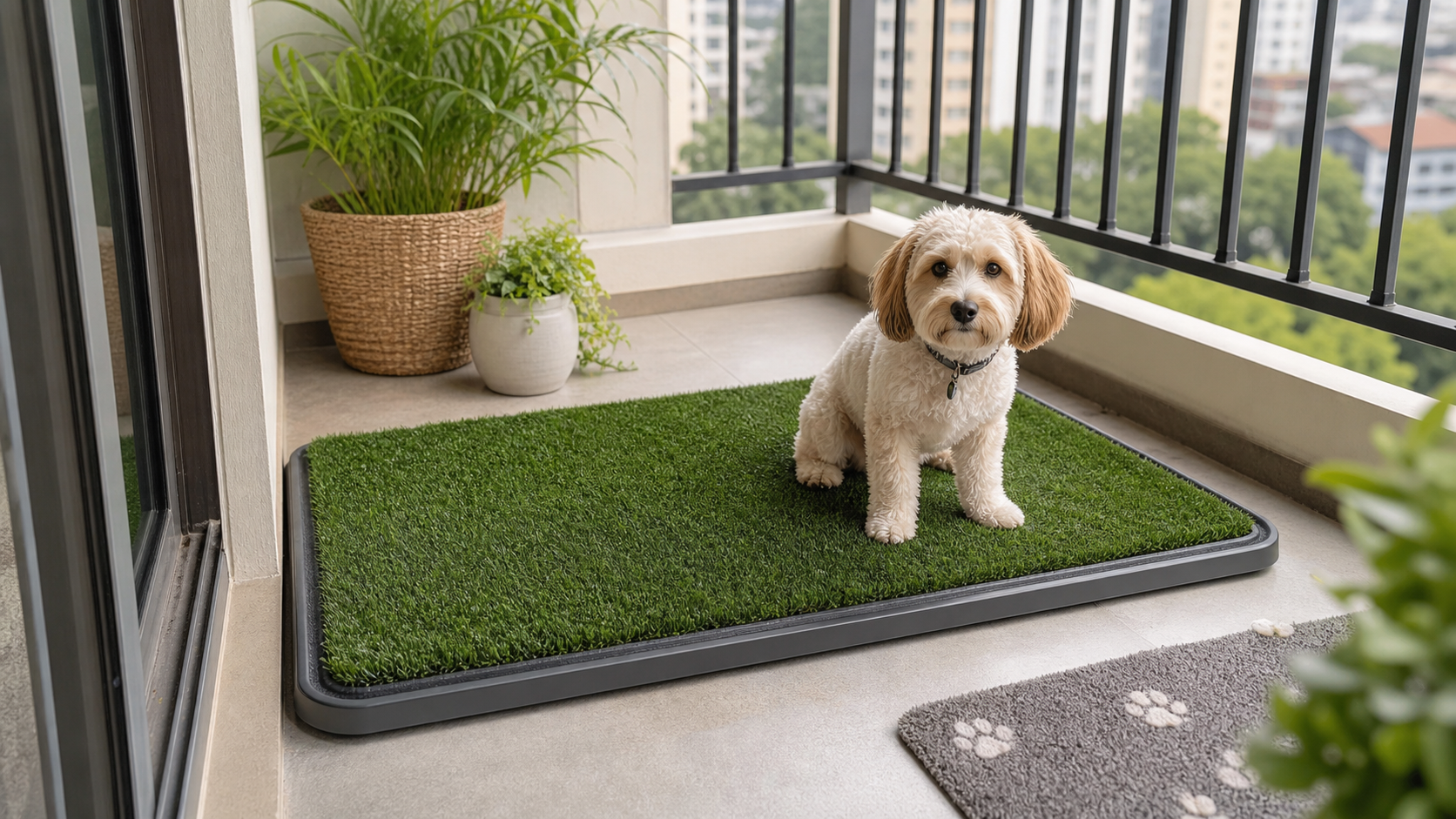
A grass surface large enough for your dog to stand and turn around.
A drainage layer or tray underneath.
A cleaning routine that fits your daily schedule.
Solids should be removed right away. The grass and tray should be rinsed often, especially if your dog uses the area multiple times a day. If urine sits too long, odor builds quickly. For heavier use, keeping a second grass mat can help because one can dry fully while the other is in use.
The American Kennel Club notes that consistency and routine are important parts of potty training. Their guide on how to potty train a puppy is a helpful external resource if you are still building habits with a young dog.
Balcony Setups: Think About Drainage First
Balconies are popular for dog potty areas because they are close, convenient, and separate from the main living space. But they also require more planning than indoor corners.
Before setting anything up, check your lease, apartment rules, HOA guidelines, or building policies. Some buildings do not allow pet potty areas on balconies. Others may allow them only if there is no runoff, dripping, or odor issue.
The most important rule is simple: urine or cleaning water should never drip onto neighbors below.
Use a tray, drainage base, or contained system under the grass. Place the potty area away from balcony edges. Make sure you can rinse and clean the setup without sending water over the side.
For more balcony-specific considerations, see PetGrow’s balcony dog grass guide.
Patio Setups: More Space, More Flexibility
Patios usually give dog owners more room to work with. This makes them a good option for larger dogs, multi-dog households, or dogs that need more space to move before going.
Because patios are often easier to rinse than indoor spaces, cleaning can be more manageable. Still, drainage matters. If the patio surface is flat and water pools underneath the grass, odor can become a problem.
Choose a location that drains well and does not block doors, furniture, or walking paths. If the patio gets direct sunlight, look for turf that can handle outdoor exposure. Larger patios may also benefit from accessories such as turf tape, staples, or infill depending on the setup. You can browse practical installation items in PetGrow’s grass accessories collection.
Choosing the Right Size
Size is one of the most common mistakes in dog potty setups. A pad that is too small can lead to accidents around the edges, especially with larger dogs or dogs that like to circle before going.
As a general rule, your dog should be able to stand fully on the grass and turn around comfortably. For puppies, remember that they will grow. For senior dogs, choose a size that does not require awkward stepping or balancing.
Small dogs may do well with compact pads, while medium and large dogs usually need a wider area. If you have more than one dog, size up. A larger potty area can reduce hesitation and keep the setup cleaner between rinses.
What Goes Under the Grass?
The layer underneath the grass is just as important as the grass itself.
Without drainage, urine can sit under the surface and create odor. A good setup should allow liquid to move away from the top layer and collect somewhere easy to clean.
Common options include:
A collection tray for indoor or balcony use.
A drainage mat to lift the grass above the floor.
A washable base layer for patios or utility areas.
A slight slope toward a safe drainage point, if the outdoor space allows it.
The goal is to keep the top surface usable while making cleanup simple. If the system is hard to lift, rinse, or dry, it will quickly become frustrating.
For deeper drainage planning, especially for patios or larger outdoor turf areas, read PetGrow’s guide on what to put under artificial grass for drainage.

How to Control Odor
Odor control is less about the grass itself and more about maintenance.
Remove solid waste immediately. Rinse the grass frequently. Wash the tray or base with mild soap and water. Let the mat dry fully whenever possible.
For indoor setups, daily cleaning is important. For balconies and patios, cleaning frequency depends on how often your dog uses the area, the weather, and how much airflow the space gets.
Avoid harsh chemicals that could irritate your dog’s paws or make them avoid the potty area. A pet-safe cleaner is usually a better choice.
In larger outdoor pet turf areas, infill can also affect odor control and drainage. If you are comparing options, PetGrow’s article on turf sand vs zeolite vs silica sand explains how different materials perform in dog areas.
Real Grass vs. Artificial Grass vs. Disposable Pads
Each option has its place.
Real grass feels natural and is biodegradable, but it must be replaced often. It can also become messy indoors or in hot weather.
Disposable pads are easy to use, but they create ongoing waste and may not feel natural to dogs that are used to outdoor grass.
Artificial grass is reusable and works well for custom spaces. It does require cleaning, but it is often the better long-term choice for apartments, patios, balconies, and small outdoor potty areas.
If reducing single-use waste is one of your goals, the EPA’s guide on reducing waste at home offers useful general tips on choosing reusable options where possible.
Helping Your Dog Adjust
Some dogs understand a grass potty area right away. Others need time.
Place the grass in the same location every day. Bring your dog to the area after meals, naps, playtime, and first thing in the morning. Use calm praise when they use it correctly.
If your dog is used to outdoor potty breaks, try placing a small amount of familiar scent on the new grass area at first. Consistency matters more than pressure. The goal is to make the potty spot predictable and easy to understand.
If your dog refuses the area for several days, the problem may be location, size, smell, or texture. Try adjusting one factor at a time instead of changing the entire setup.
Final Thoughts
A dog potty area can make apartment, balcony, and patio living much easier, but the setup needs to be planned carefully.
Start with the problem you need to solve. Is it late-night convenience? Puppy training? Senior dog support? Bad weather? Limited outdoor access? Once you know the main need, it becomes easier to choose the right size, location, grass surface, and drainage setup.
A good potty area should be easy for your dog to use, easy for you to clean, and considerate of your home and neighbors. With the right setup, city living with a dog becomes cleaner, simpler, and much less stressful.
For more product and setup questions, PetGrow’s FAQ page is a good next stop.
Share:
What Is Turf Infill? A Simple Guide for Pet Owners
Best turf edging ideas for a clean, finished lawn