The demand for pet grass for dogs is rising as more dog owners look for ways to create convenient, pet-friendly spaces at home. This makes it important to choose the right surface, not just for the occasional potty break, but for everyday comfort, cleanliness, and long-term value.
For those starting their search, Pet Grows’ Artificial Grass collection offers a range of solutions designed for daily use and easy maintenance.
What “Daily Use” Changes When You Are Choosing Pet Grass
Selecting pet grass for daily use requires a different approach than choosing a solution for infrequent needs. Surfaces exposed to everyday activity must be able to withstand repeated use, frequent rinsing, weather exposure, and the energy of active dogs, while also reducing allergens and discouraging pests. Over time, daily-use turf will reveal weaknesses that occasional-use products might not show.

Daily use puts pet grass to the test, demanding both durability and easy upkeep.
Regular maintenance improves outdoor air quality and can benefit both pets and owners with allergies.
Before making a selection, consider whether your space will be used mainly for play, potty, or both, and how often you’ll need to clean and rinse the area. For a comprehensive look at pet turf benefits, see our full explanation of pet turf and its benefits.
The 4 Most Important Factors When Choosing Pet Grass for Dogs
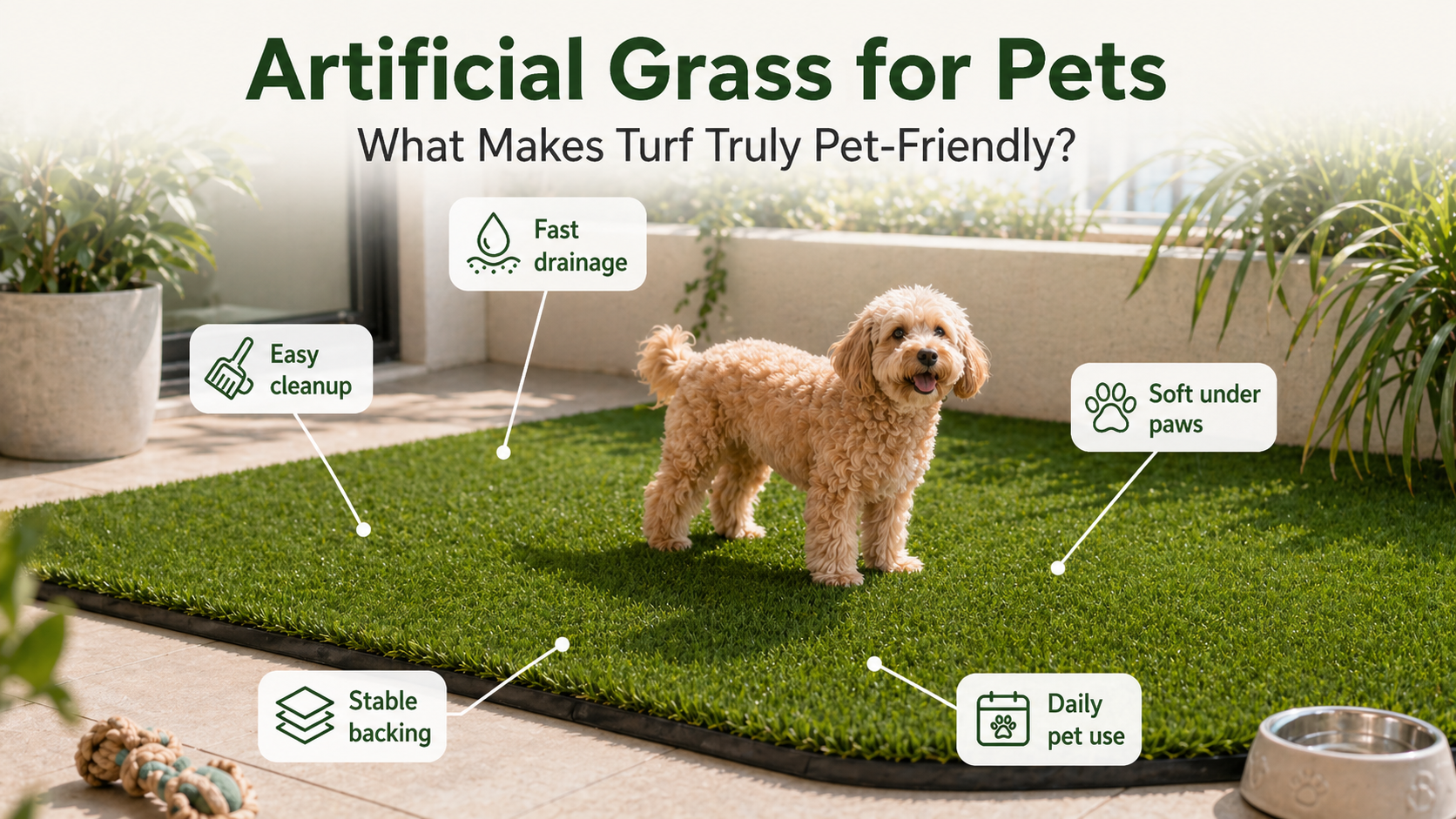
Surface feel, drainage, stability, and ease of cleaning are the four most important factors to evaluate.
- Surface feel and stability: The turf should feel comfortable under your dog’s paws while staying stable, even with daily running and play.
- Drainage and cleanup routine: Effective drainage is crucial for hygiene. Choose turf and backing that allow water and urine to drain evenly through the turf, preventing pooling and reducing bacterial growth.
- Antimicrobial protection: Antimicrobial treatments and lead-free, non-toxic backing can help reduce bacteria and make maintenance easier.
- Daily-use priorities: Focus on practical details: how easy it is to rinse the area, how quickly it dries, UV-resistant fibers, and whether your setup needs extra airflow or drainage enhancements.
For a full breakdown, see our complete guide to choosing artificial grass for dogs.
Remember, the best artificial grass for dogs will consistently meet your daily needs, not just look appealing at first glance.
How the Right Choice Changes by Location
The best pet grass setup depends on where it will be installed. Balconies and patios have unique needs, especially when it comes to drainage and space. Outdoor yards may require thicker, more durable turf, while shaded or partially covered areas need extra attention to airflow and drying.
- Balcony/Patio: Compact size, superior drainage, and anti-slip backing are priorities.
- Side Yard/Backyard: Durability and UV resistance matter most. Artificial turf eliminates muddy paw prints and digging damage, providing consistent green space year-round.
- Indoor/Outdoor Potty Area: Easy removal and cleaning are essential. Indoor surfaces can aid with training and limit accidents.
For more on balcony solutions, see our balcony dog grass guide.
If you’re working over concrete or need drainage advice, check out what to put under artificial grass for drainage.
The Role of Infill, Drainage, and Maintenance Support
Is the turf alone enough? Not always. The right infill and drainage design are critical for odor control and maximizing turf lifespan.
The right combination of infill, such as antimicrobial or zeolite infill, drainage, and a consistent cleaning routine will keep your dog grass pads fresh and your pet area odor-free.
Proper artificial pet grass systems also contribute to water conservation by eliminating the need for regular watering.
For more on infill options, see our guide to artificial infill for dogs and Artificial Turf Infill 101.
Common Mistakes Dog Owners Make When Choosing Pet Grass
Many dog owners focus on surface softness or appearance, but overlook drainage, sizing, or cleaning needs. Common pitfalls include excessive surface heat, odor in poorly drained installs, higher upfront cost, and infill movement. These issues are preventable with careful planning; installing without proper drainage is a primary cause of odor complaints and reduced turf lifespan.
Key takeaway: Good performance comes from matching the dog-friendly grass surface to your pet’s daily routine and your cleaning habits, not just picking what looks best in a photo. Consulting with a reputable provider can help you avoid these common errors.
If you haven’t already, explore options in the Artificial Grass collection to compare practical features.
A Quick Daily-Use Checklist Before You Buy
Before purchasing, use this quick checklist to make sure your chosen pet grass for dogs meets your needs:
- Dog size & activity: Select turf that can withstand your dog’s weight and play style.
- Frequency of use: Consider daily traffic and how often you’ll clean the area.
- Location: Match the turf to your installation site: balcony, patio, yard, or indoor potty.
- Rinse access: Make sure you can easily rinse and maintain the area.
- Drainage: Confirm the turf and base allow for quick, even drainage.
- Purpose: Decide if the area is just for potty, play, or both.
Check warranty details for each product, as coverage varies by turf type.
Once you’ve identified your daily-use requirements, browse the Artificial Grass collection to find the right fit for your home and pet.
Share:
What Is the True Artificial Grass Installation Cost? A Pro Guide
Dog Turf Potty Setup: How to Build a Cleaner Outdoor Potty Area