When considering artificial grass for your pets, you’ll quickly encounter turf infill for pets—but what does it actually mean and why does it matter? For pet owners, choosing the right infill can be the difference between a comfortable, odor-free play space and one that needs constant attention. A simple rule for pet owners is that choosing the right infill matters for comfort, safety, and hygiene.
The right infill ensures your artificial lawn is not only beautiful, but also practical for your pet's daily life. If you’re thinking about upgrading or installing pet turf, it’s smart to explore Grass Accessories early in your decision-making process to make sure your setup meets your pet’s needs.

What Is Turf Infill? (The Simple Definition for Pet Owners)
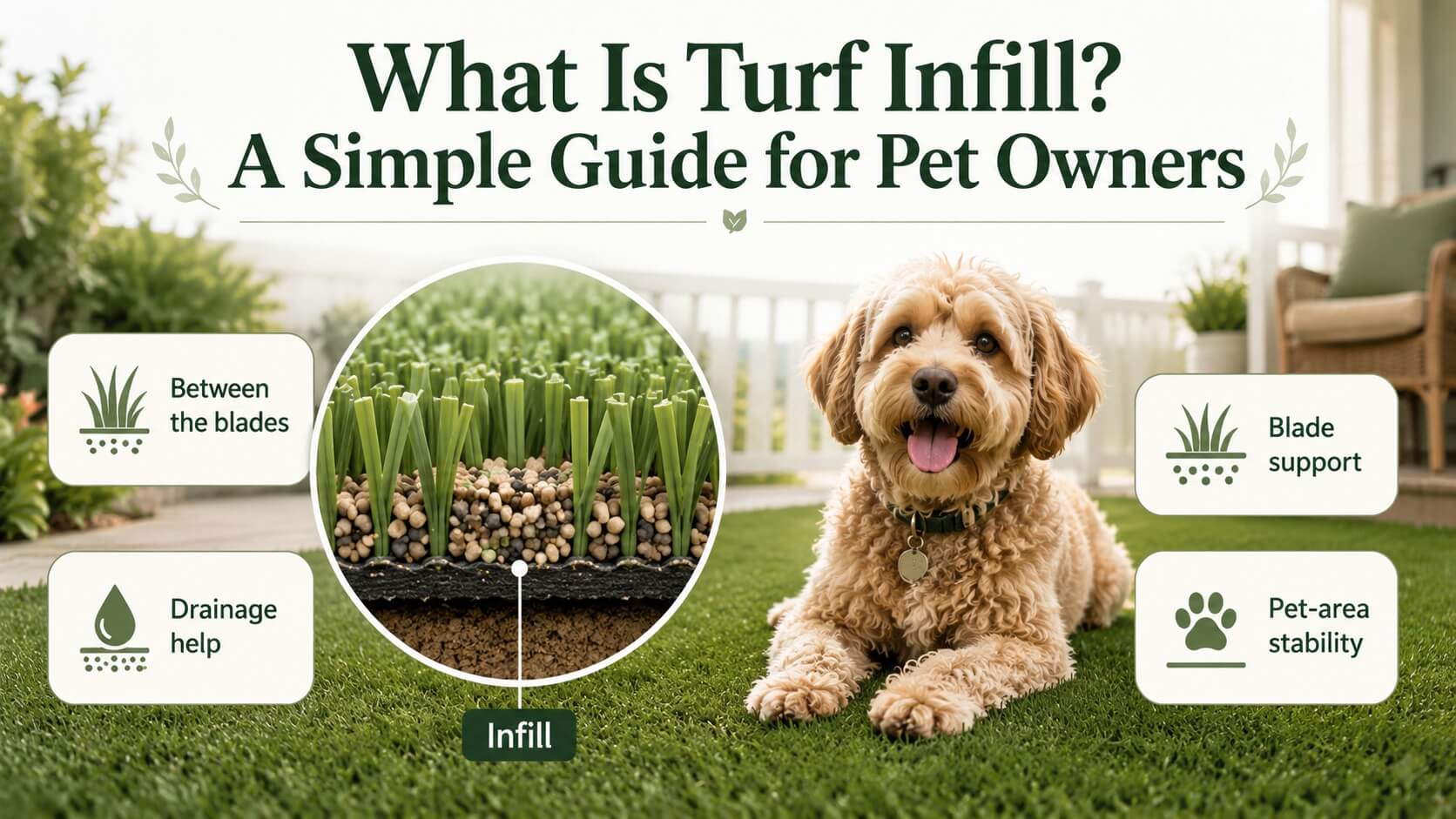
Think of artificial grass infill types as the “secret ingredient” that brings your synthetic lawn to life. Infill refers to the granular material—like sand, specialty blends, or natural minerals—spread between the blades of artificial turf after installation. Its job is to support the turf structure, provide cushioning, and help with drainage.
Infill serves several important purposes that contribute to the overall performance and longevity of artificial grass. Without infill, turf blades would flatten, drainage would be compromised, surfaces could wrinkle, and the backing would wear out faster—detracting from the natural look and feel.
That’s why exploring turf accessories for your pet’s needs is a key early step in any artificial grass project.
Why Pet Owners Hear So Much About Infill
Pet owners hear about infill because it solves real problems: odor, drainage, traction, and surface comfort. Specialized infills with antimicrobial or odor-neutralizing properties, such as zeolite or antimicrobial coated infill, are commonly used in pet applications due to their ability to resist bacteria and control unpleasant smells.
Simply put, infill isn’t just for looks—it’s essential for making pet turf clean, safe, and comfortable.
Most pet turf installations today rely on these advanced infill solutions for odor and hygiene, while also offering peace of mind when pets and children play on the same lawn.
What Turf Infill Can Help With (Blade Support, Drainage, Odor Management)
Ever wondered why some pet lawns look lush and smell fresh all year, while others don’t? The answer often comes down to the infill you choose.
Here’s how infill supports your turf system:
- Blade Support: Infill helps each blade of artificial grass stand upright, giving your lawn a realistic, plush appearance while reducing matting.
- Drainage Support: Quality infill aids the flow of liquids through the turf, preventing urine and rainwater from pooling and keeping the surface cleaner.
- Odor Management: Specialized infills like zeolite and antimicrobial coated infill are designed to trap and neutralize ammonia from pet urine, significantly reducing odors and minimizing bacterial buildup.
If you want to compare the best options for odor and drainage, see How to Choose the Best artificial infill for dogs? A Full Comparison.
The bottom line: Treat infill as an integral part of your turf system—not a magic fix, but a necessary step for lasting comfort and cleanliness.
Common Types of Infill Pet Owners May See
Pet owners may see a variety of infill types, each with unique benefits for health, maintenance, and sustainability:
- Sand-Based Infills: Traditional and affordable, but may not control pet odors well.
- Zeolite Turf Infill: A natural mineral highly valued for its odor-fighting and cooling properties.
- Antimicrobial Turf Infill: Acrylic-coated sand particles offering both odor control and bacterial resistance for pet turf areas.
- Organic/Eco-Friendly Infill: Made from cork, coconut husk, or walnut shells, appealing to eco-conscious pet owners and helping keep turf cooler in direct sun.
- Non-Toxic Turf Infill: Many modern infills are certified non-toxic, suitable for households concerned about pet and child safety.
The shift towards eco-friendly and antimicrobial infills continues to accelerate, reflecting growing health and environmental priorities among pet owners.
Takeaway: Compare materials based on your dog’s use habits, drainage needs, and maintenance preferences—not just cost.
Do All Pet Turf Areas Need Infill?
It’s a question nearly every pet owner faces: is infill always required?
The answer depends on your setup. For small, temporary mats or balcony potty areas, infill-free artificial grass may suffice. But for larger outdoor spaces or high-traffic dog runs, infill is typically recommended to maintain surface stability, enhance drainage, and extend turf life.
Some artificial turf systems are designed to work without infill and rely on thicker blades for structure, but these are less common for pet applications.
For a deep dive on drainage and base layers, see What to put under artificial grass for drainage?.
What really matters is matching the turf and infill to your intended use—always check product details and consult your installer if unsure.
How to Think About Infill Before You Buy (Checklist for Pet Owners)
Here’s a quick checklist to help pet owners choose the right infill:
- Dog Size and Activity Level: Larger or more active dogs may need heavier, more supportive infill.
- Potty Use: If your turf will be a potty area, prioritize odor-neutralizing infills like zeolite or antimicrobial coated infill.
- Heat Exposure: For sunny spots, consider cooling infills or organic materials that dissipate heat.
- Drainage Needs: Ensure your chosen infill and turf combo supports excellent drainage.
- Cleaning Routine: Select infill compatible with enzyme-based cleaners for easy maintenance.
- Surface Type: Is your turf temporary or installed? Some infills are easier to replenish as needed.
- Pet Turf Safety Standards: Look for non-toxic, pet-safe certification.
A common mistake is opting for basic sand infill, which doesn’t control odor as well as specialized alternatives.
Remember, even the best infill needs to be paired with solid base preparation and professional installation for the best results.
What is pet turf and its benefits? A Full Explanation offers more context on choosing the right system.
For turf support items, browse Grass Accessories to pair your infill decision with proven maintenance solutions.
Real-World Proof—How the Right Infill Makes a Difference
Mini Case Study: Blanche Park Dog Park
In high-use dog park settings, switching from muddy ground to a pet turf system with antimicrobial infill can create a cleaner, more odor-controlled, and more durable surface for pets and owners.
Similarly, pet owners report that switching from basic sand to specialized infill like antimicrobial coated infill or zeolite results in a noticeable reduction in turf odors and improved comfort for their pets.
These improvements not only boost cleanliness but also reduce maintenance time and keep both pets and owners satisfied.
The bottom line: Choosing the right infill can transform both public and private pet turf spaces.
Definitions, Safety, and Best Practices for Pet Turf Infill
Definitions:
- Artificial Turf: Synthetic grass for home or pet use.
- Infill: Material between turf blades for support, drainage, and odor control.
- Pet Turf: Turf specifically designed for pets with enhanced durability and drainage.
Safety & Environmental Guidance: Industry best practices recommend choosing non-toxic and eco-friendly infills, such as antimicrobial coated infill or natural minerals like zeolite, which are recognized for pet and environmental safety.
Always make sure the turf system has adequate drainage and avoid infills that may contain harmful chemicals.
Best Practices:
- Select infills that offer proven odor control for pet use.
- Maintain a consistent cleaning routine.
- Be mindful of turf temperature in direct sun.
- Applying enzyme-based cleaners can also help control odors safely and effectively.
Frequently Asked Questions About Pet Turf Infill
Q: Can I use any infill for pet turf? A: Stick with pet-specific, non-toxic infills—generic sand or crumb rubber may not control odor or be as safe.
Q: How often should I replenish infill? A: Check infill levels periodically, especially in high-traffic areas; top off as needed for consistent performance.
Q: Is infill safe for puppies and children? A: Many modern infills, including zeolite and antimicrobial coated options, are certified non-toxic, but always verify with your supplier.
For more support, visit the FAQ page or see our maintenance tips.
Share:
Turf Sand vs Zeolite vs Silica Sand: Which Infill Is Best for Dog Turf?
Grass Pee Pad for Dogs: Best Uses for Balconies, Patios, and Apartments